One bleed valve, one radiator
Bleeding fixes the radiator you just did. A failing circulator or a stuck valve can leave other radiators cold even after you've bled every one in the house.

A radiator that stays cold usually means air trapped inside it, so hot water can't fill the whole thing. Bleeding it fixes that in most cases. If bleeding doesn't help, or the radiator has been cold for a while, the problem is likely further back: a circulator pump that's stopped moving water through the loop, a zone valve stuck shut, or sludge built up inside the radiator itself blocking flow. A boiler that's losing pressure or short cycling can also leave some radiators warm and others cold, since there isn't enough water or heat getting pushed through the whole system. None of these fix themselves. With the cost of electric heat in Maryland, a boiler working harder to push heat through a blocked or low system runs up your bill while rooms stay cold. The longer a zone valve or pump sits bad, the more likely another part of the system wears down trying to compensate.
Hot water starts at the boiler and gets pushed out by the circulator pump, through the pipes, into each radiator, and back again. Every radiator has a small valve near the top, usually a square socket, where trapped air can be let out with a key or a flathead screwdriver. That air is what keeps water from filling the radiator all the way, so one end stays cold while the other end is hot. If the whole house feels off instead of just one radiator, look at the boiler's pressure gauge. Below about 12 psi, there isn't enough water in the system to reach the radiators upstairs. On a house with more than one heating zone, a stuck zone valve can cut off water to an entire loop of radiators while the rest of the house heats normally. And in an older radiator, sludge or mineral scale can build up right at the inlet valve, blocking flow even after the air has been bled out.
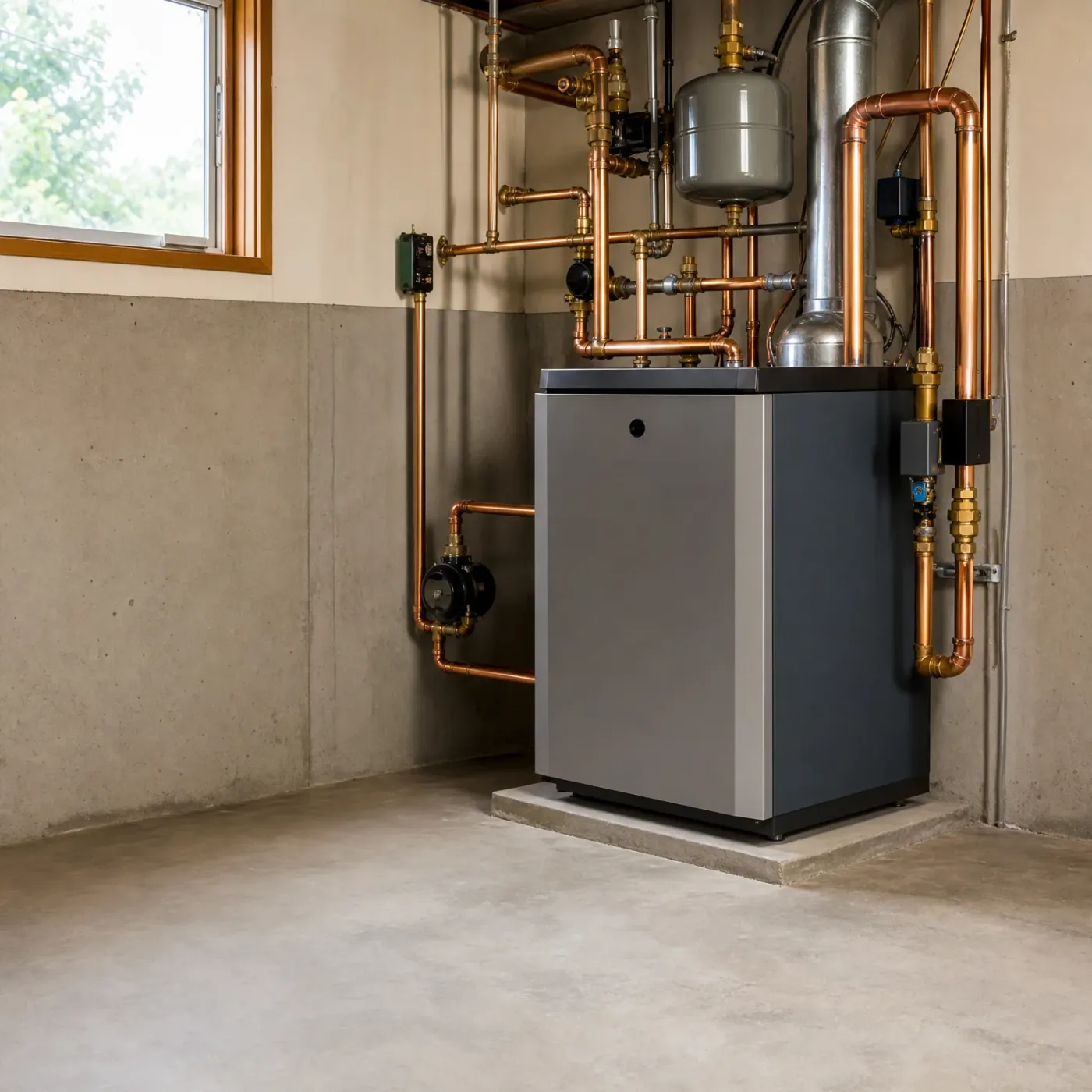
A cold radiator rarely stays a small problem. The thermostat reads the temperature where it sits, not in the room where the radiator went cold, so the boiler keeps firing long after it should have shut off. That's the part most people don't see. The boiler isn't idle while one room stays cold. It's working harder, cycling longer, trying to satisfy a thermostat that can't tell what's happening three rooms away.
A circulator pump that's starting to fail will usually still make noise. It hums, it clicks, it sounds like it's doing its job, which is why this kind of failure gets missed. The boiler runs, the pump sounds normal, and the only sign something's wrong is the radiator that never warms up.
Time matters here too. A radiator that's cold for an hour after you bled it and didn't get hot again is one thing. A radiator that's been cold for days is another. The longer it stays cold, the more likely the cause is a stuck zone valve or a circulator on its way out, not air in the line.
None of this fixes itself. A part that's failing quietly keeps failing quietly, and the room it feeds can go the rest of the winter without real heat unless someone finds the actual cause.




Bleeding fixes the radiator you just did. A failing circulator or a stuck valve can leave other radiators cold even after you've bled every one in the house.
A circulator pump can seize or slow down without any noise or smell to warn you. Cold radiators are often the only sign something's wrong.


A cold radiator in a Maryland house with a boiler is easy to live with for a week and expensive to live with for a winter. Most homes around you heat with electricity, so your boiler is already an outlier, and finding someone who works on hydronic heat regularly, not just furnaces and heat pumps, takes more calling around than it should. That search usually means a handful of calls, explaining the same cold radiator and the same bleed valve you already tried, then sitting with quotes you can't really compare because each contractor saw something different. Here, one request goes to one licensed local contractor, someone who deals with circulator pumps and stuck valves on boilers like yours every winter and knows which one tends to go first. You get one conversation instead of five, with someone who already knows what a cold radiator in a back room usually means before they walk in. With power costing what it does here, a boiler running long to cover for one cold room is worth sorting out before the next cold snap.
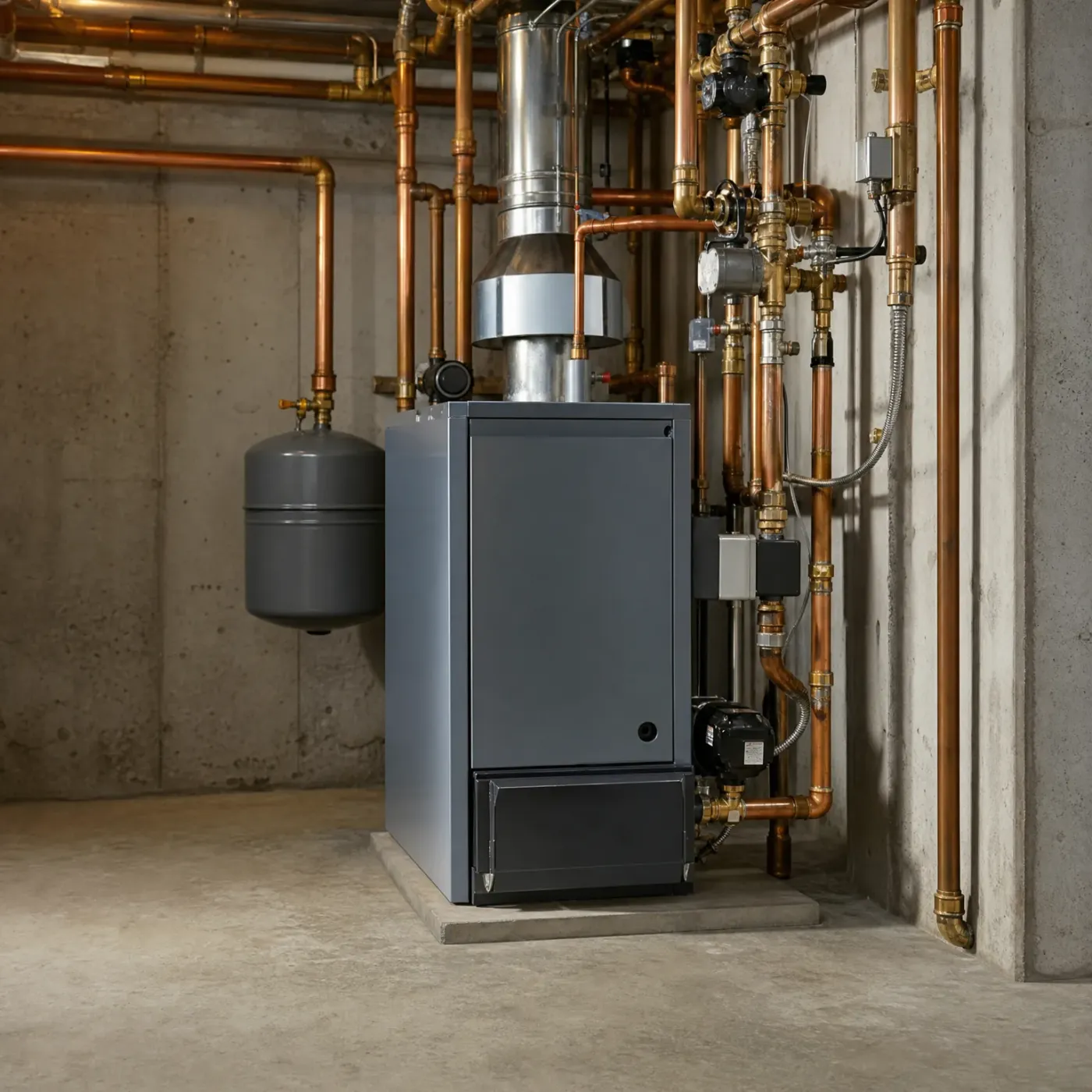
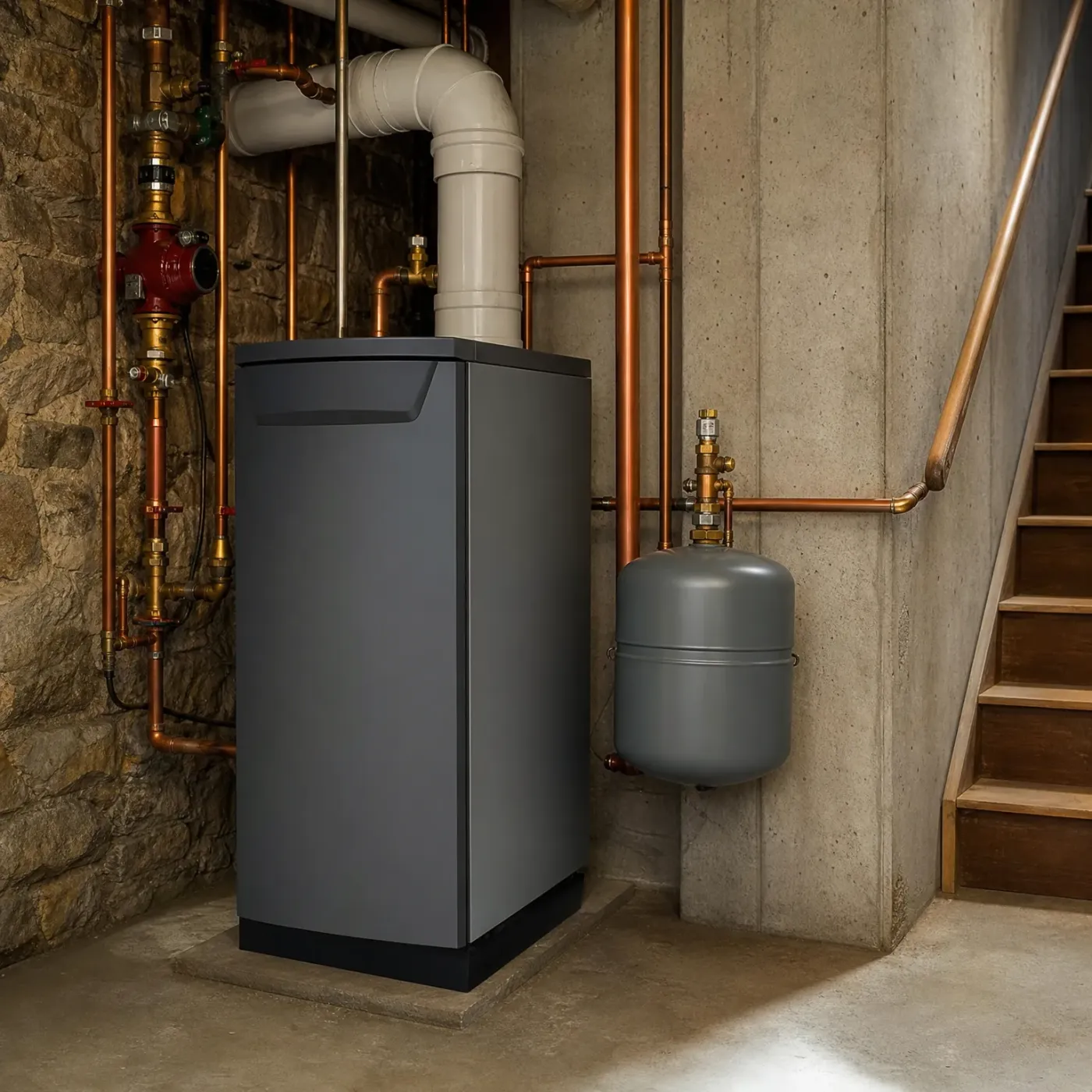
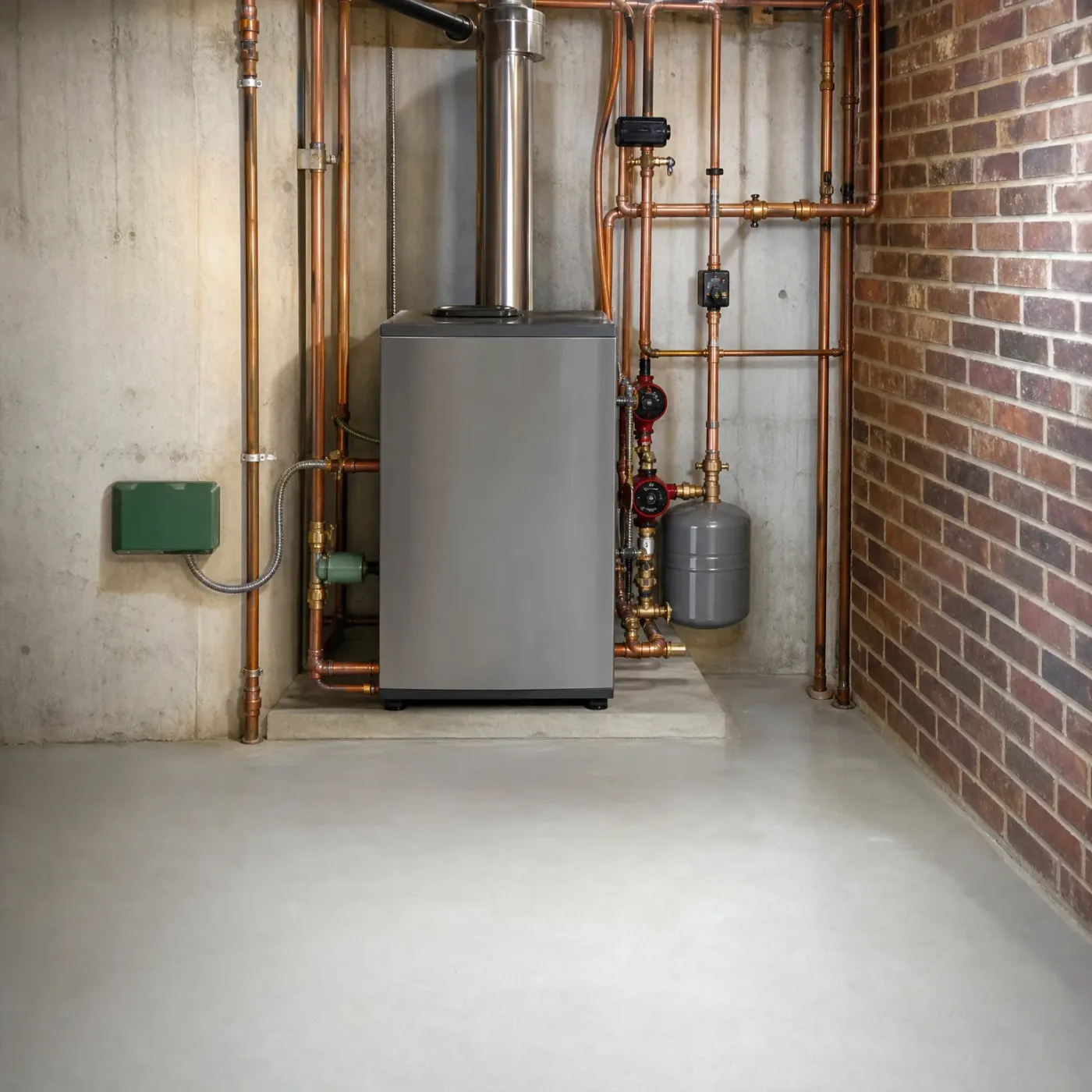
This is what a boiler in good shape looks like, pipes and pumps all doing their job, water reaching every radiator in the house. No cold spots, no rooms running behind the thermostat.
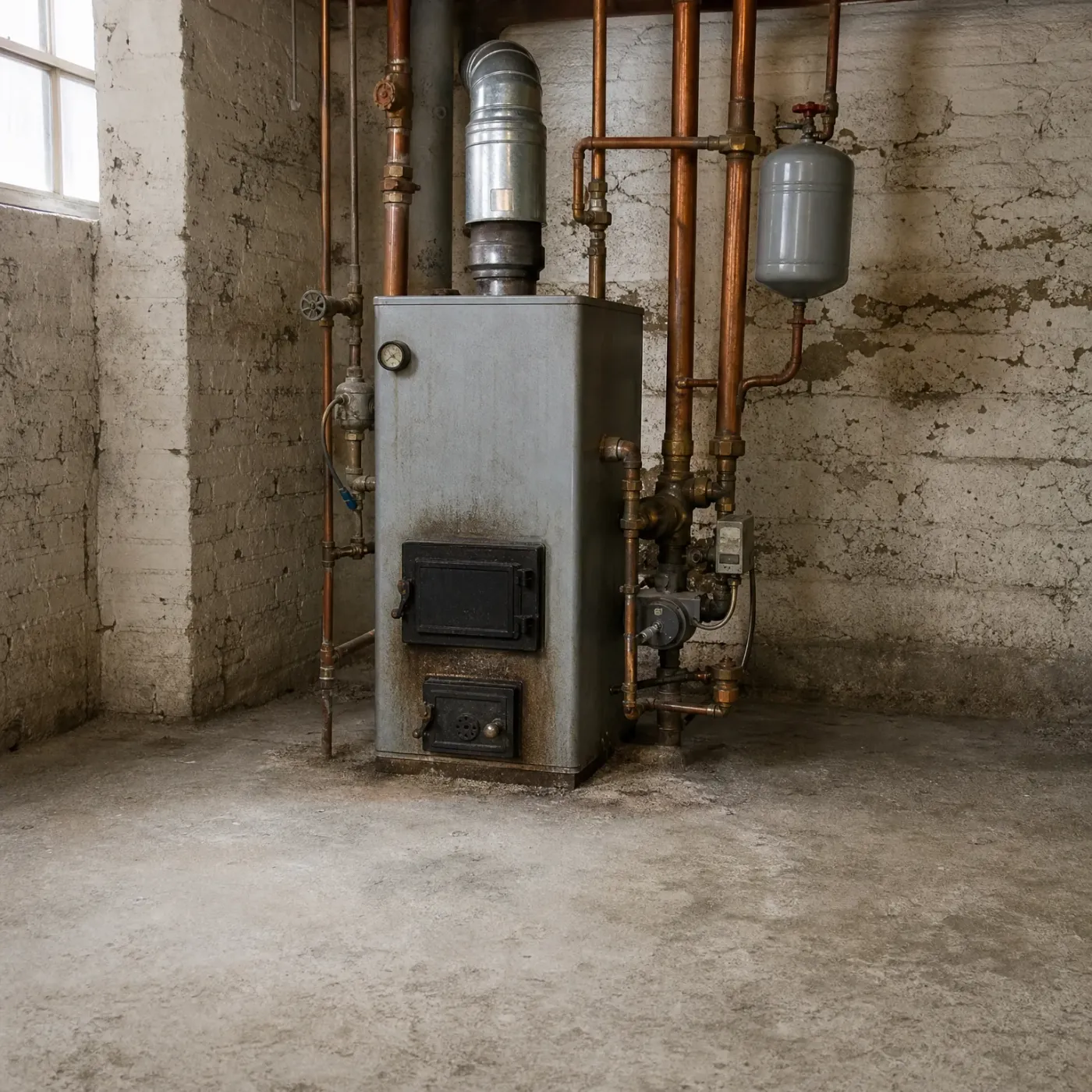
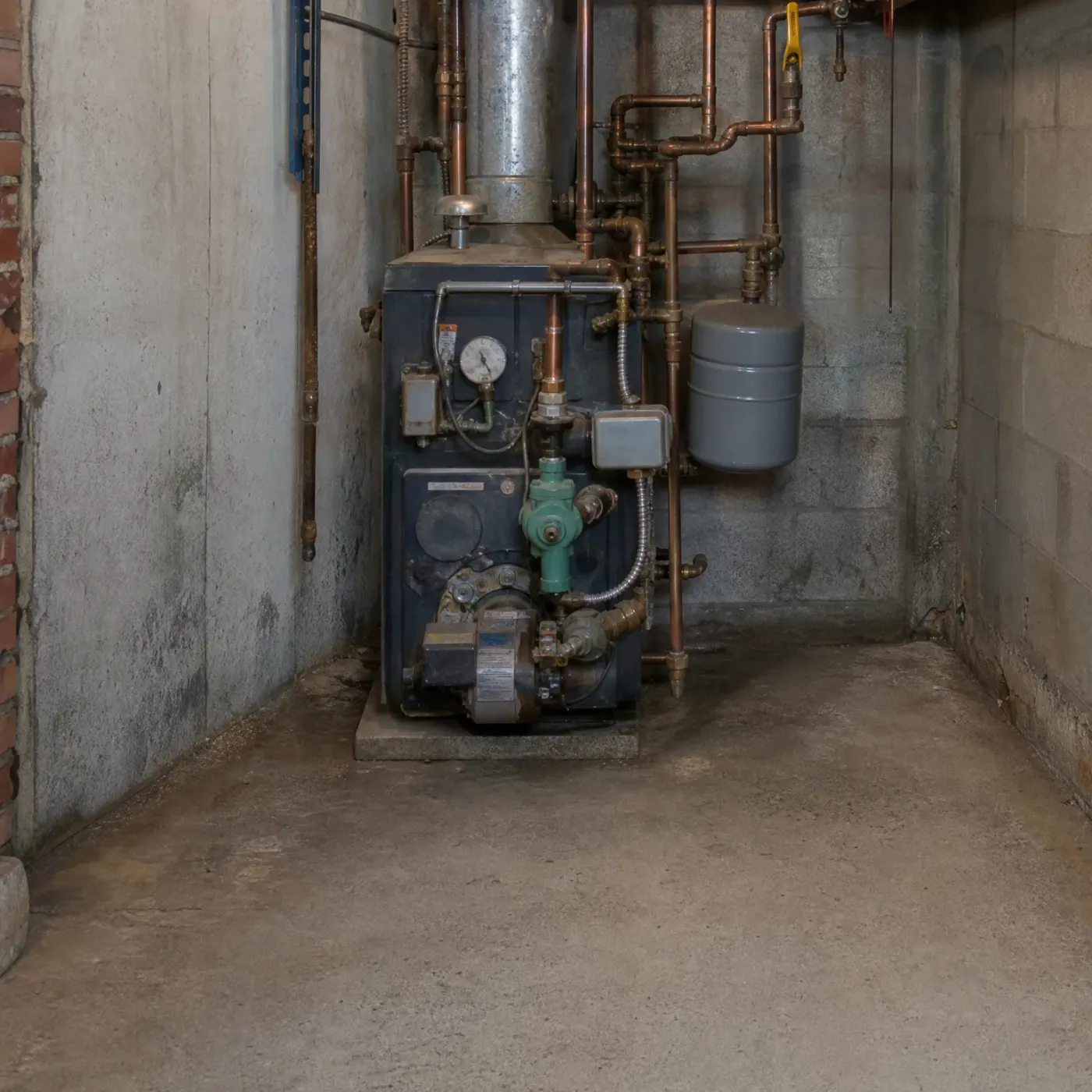
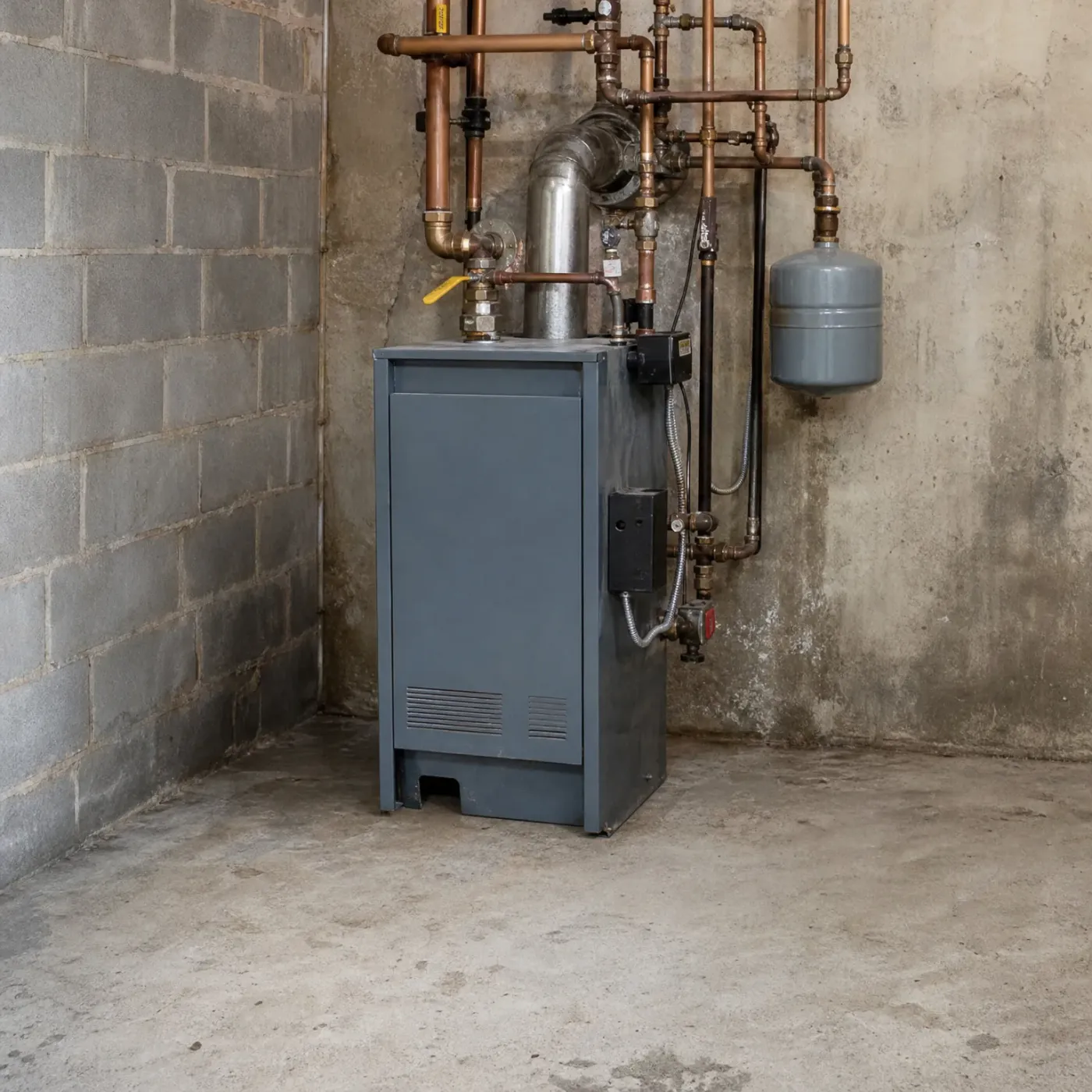
Same setup, same pipes running to every radiator. But in a boiler this age, one stuck valve or one circulator starting to fail is enough to leave a radiator cold while the rest of the house heats fine.
On a January night here, the air outside is sitting around 27°F. Your boiler has to push hot water through every radiator just to keep up with that. If one radiator can't get water to it, that room falls behind fast, and you'll feel it before morning.
NOAA nClimDiv 1991-2020 county normals weighted by homes
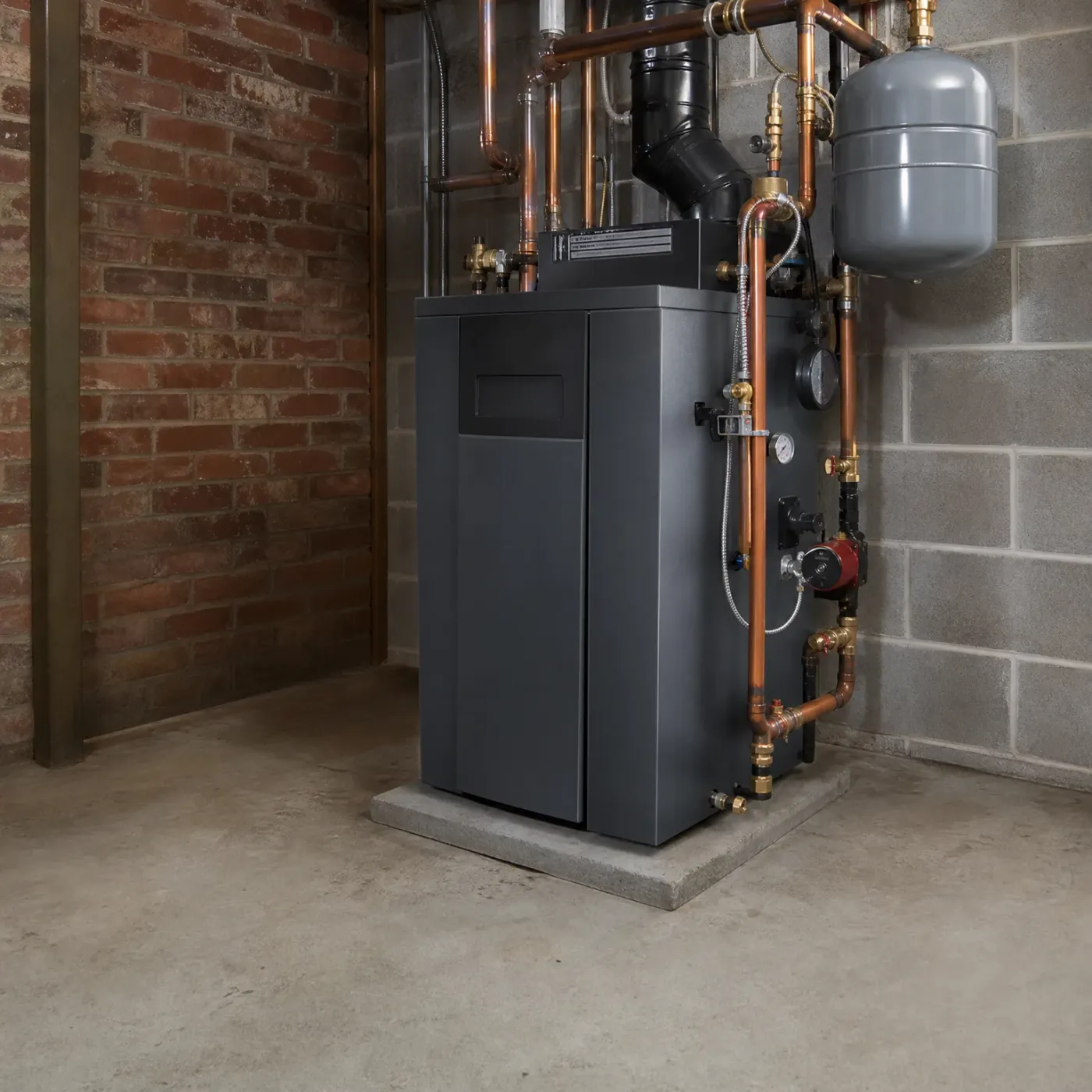
This is what a working system looks like. The expansion tank holds steady pressure, the gauges read normal, and water moves through every pipe without a fight. Each radiator in the house gets hot, start to finish, and the boiler doesn't run longer than it has to.
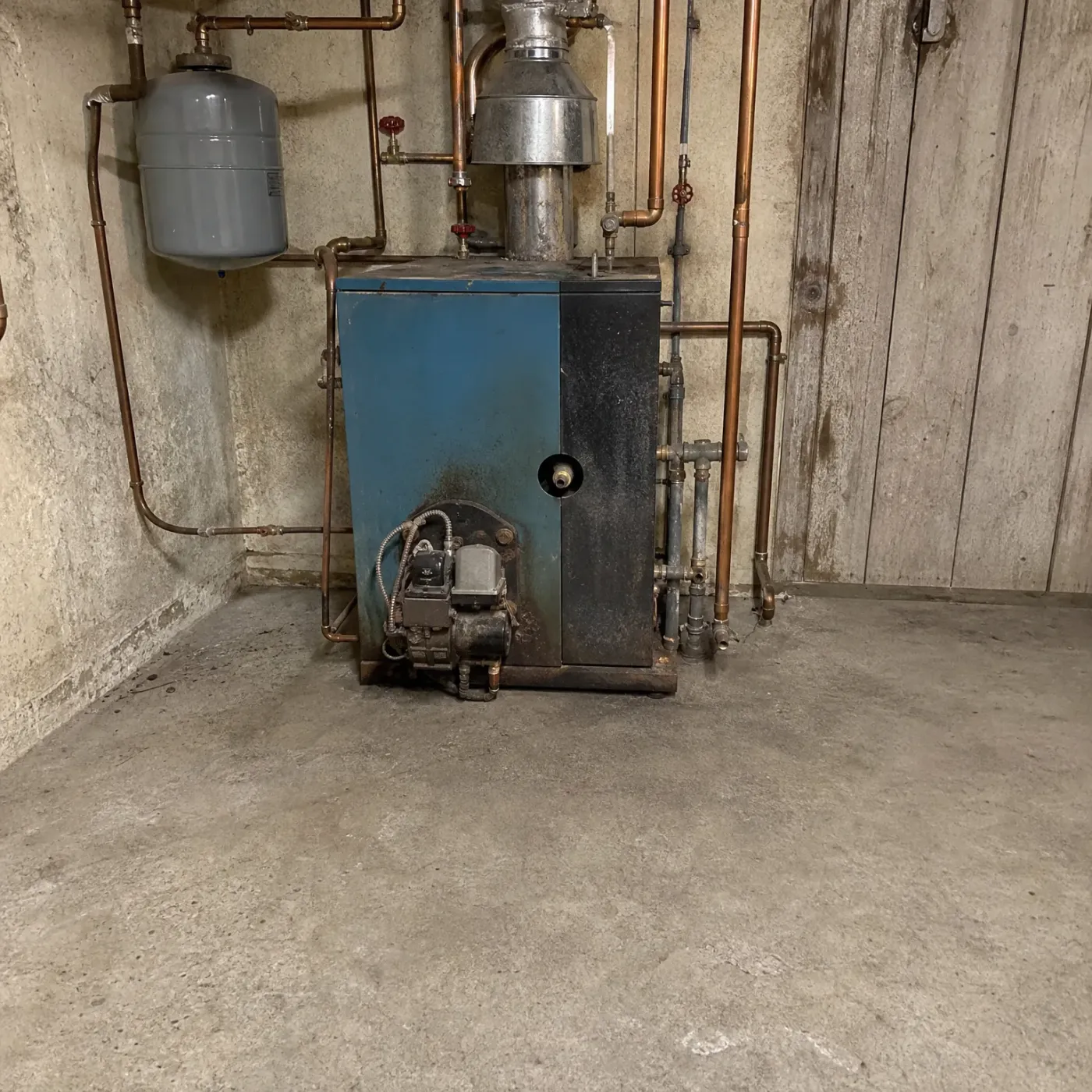
An older boiler like this can still heat the house for years, but a circulator or valve inside it wears down quietly. Nothing looks wrong from the outside. You just notice a radiator that stays cold, or a boiler that runs longer than it used to for the same result.
Statewide, winter nights average 27°F, according to NOAA climate data. On a night that cold, your boiler has to keep water moving through the whole loop, not just the radiators near the thermostat. A room with a cold radiator doesn't just feel chilly, it keeps losing heat the whole night, since nothing is replacing what the cold air outside pulls out through the walls and windows. By morning that room can be noticeably colder than the rest of the house, even with the boiler running the entire time. That gap is usually the first sign something past the radiator itself, a valve or the circulator, isn't doing its job.
NOAA nClimDiv 1991-2020 county normals weighted by homes
You've probably noticed it room by room. The radiator in the living room gets hot within a few minutes, but the one in the back bedroom stays lukewarm or stone cold no matter how long the boiler runs. You might hear gurgling in the pipes, or the boiler cycling on and off more than it used to. The thermostat says the house is warm, but that back room tells a different story, and whoever's trying to sleep or get dressed in there knows it. Left alone through a Maryland winter, that one cold radiator usually doesn't get better on its own, and the boiler ends up working harder to cover for it.
Boiler heats water and sends it toward the circulator pump
Circulator pump pushes hot water out through the supply pipes
Water travels through each branch line to its radiator
Hot water enters the radiator and fills it from one end

Air in the line, a stuck valve, or a circulator that's quit pulling its weight. Bleeding the radiator tells you which one you're dealing with. If it stays cold after that, the cause is somewhere in the pipes or the pump, and that part isn't a weekend fix with a radiator key.
Keeping everyone warm through a Maryland winter means knowing which of those three it is before the next cold night, not after you've called around to three or four companies, described the same cold radiator each time, and waited on quotes to compare. A licensed boiler contractor local to you sees this setup every winter and knows what tends to fail first in a system like yours. One call, one visit, one answer on what's keeping that radiator cold.