Why your boiler won't turn on in a Maryland winter

Step 1 of 3: Equipment

A boiler that won't fire up in cold weather is usually stuck on one of a few things: the igniter, the thermocouple or flame sensor, low water pressure, or a pilot light that went out. Most of Maryland's older homes run on gas or oil boilers, and a hard freeze puts more strain on all of these at once, since the system runs longer and more often to keep up. Low water pressure is the one worth checking first. If the gauge reads below where it should, the boiler may be shutting itself off as a safety measure rather than failing outright. A tripped high limit switch does the same thing. None of these are expensive parts, but a boiler that won't start on a cold night in Maryland isn't something to leave alone until it warms up. A small ignition problem now can mean no heat at all during the next cold stretch.

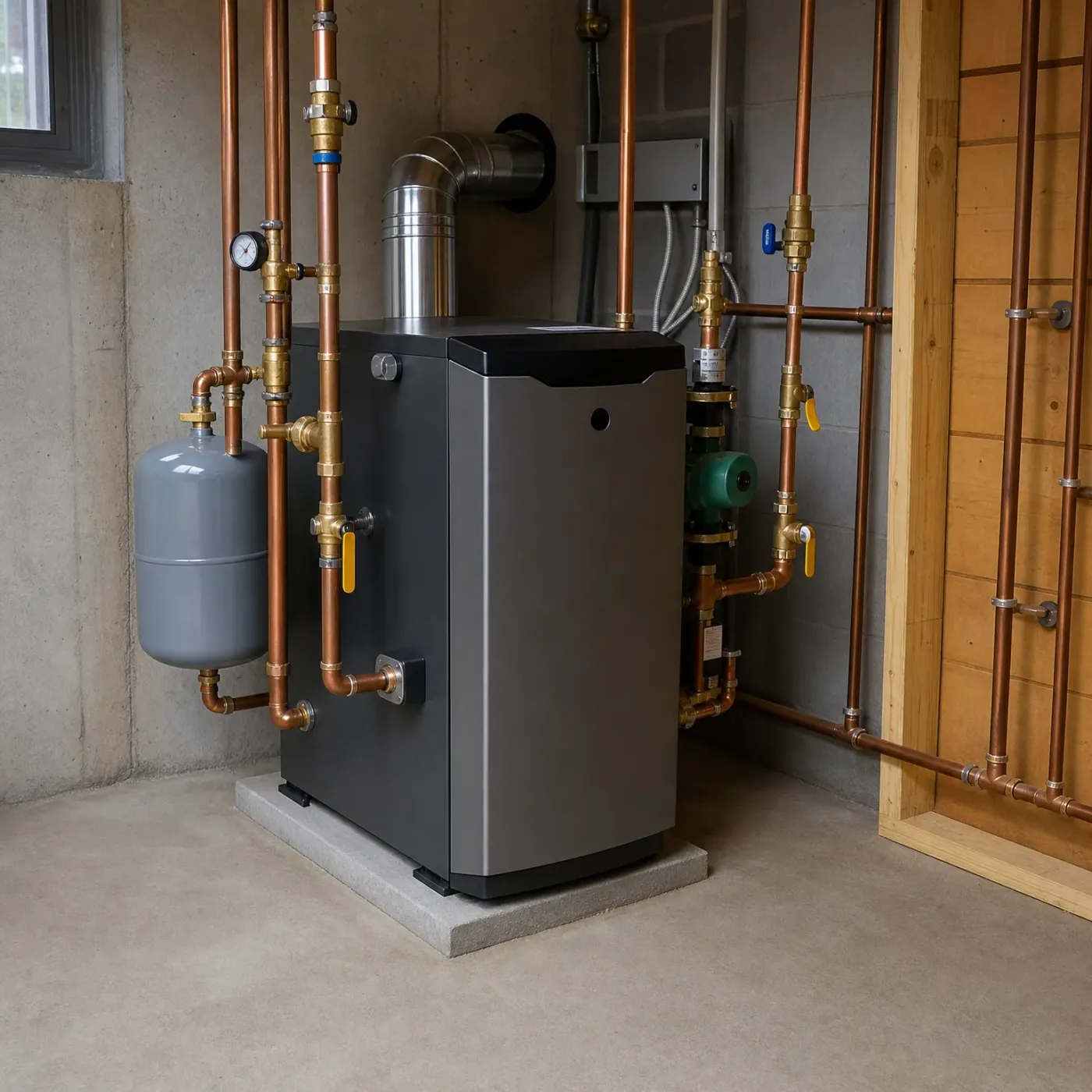
A dark gray floor-standing boiler on a concrete pad in a basement, surrounded by copper piping, brass valves, a gray expansion tank, a circulator pump, and a metal flue pipe against concrete block walls.

Running the way it should

A boiler like this fires on its own schedule, holds steady pressure, and heats the house without you thinking about it. The gauge sits where it should, the pump runs quiet, and the flue draws clean. This is what a working heating season looks like.

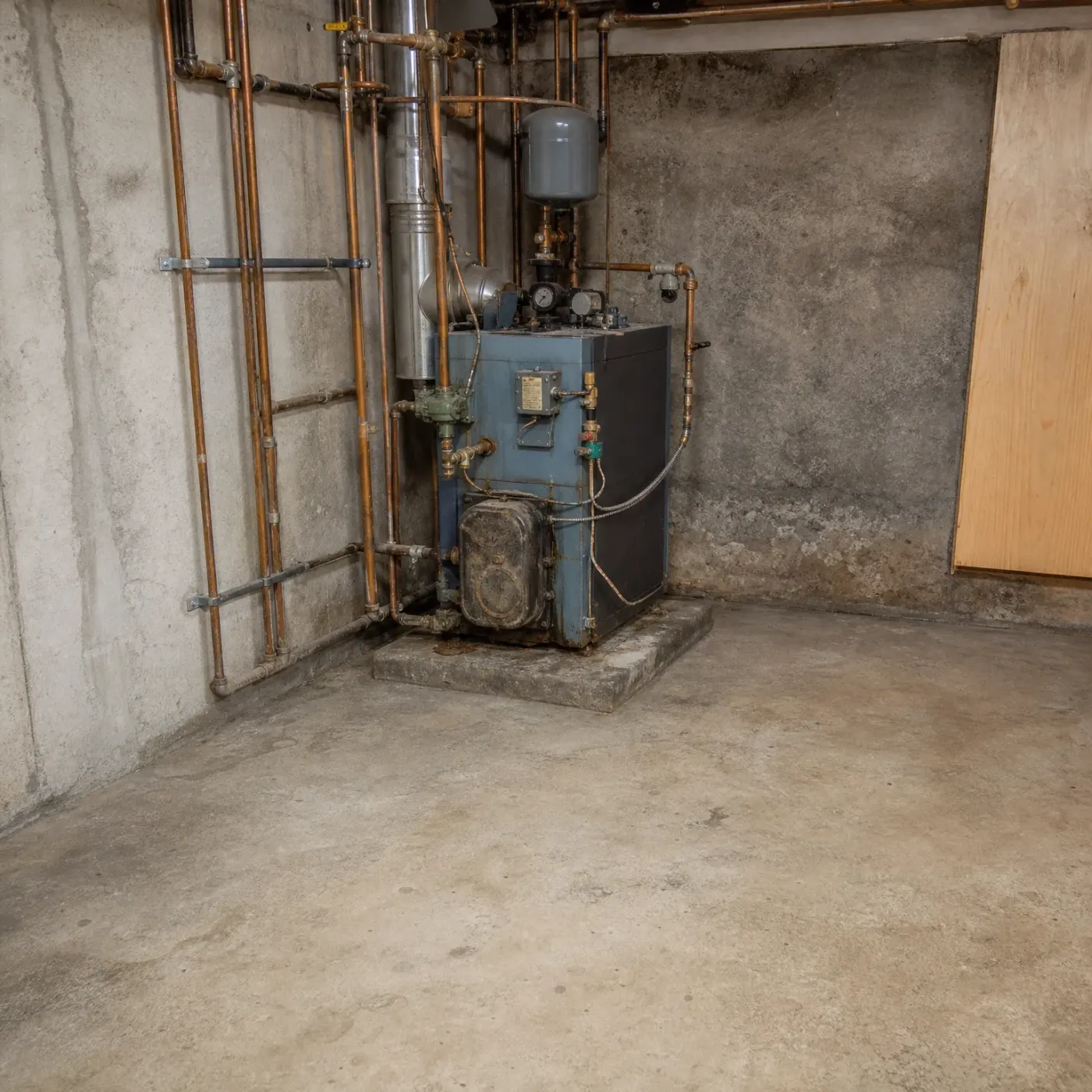
A blue boiler on a raised concrete pad in a basement corner, with copper and steel pipes, a gauge cluster, an expansion tank, and a metal flue running up the bare concrete walls.

Signs it's falling behind

An older boiler on a concrete pad with bare walls around it has usually been through a lot of winters already. Corrosion on fittings, a flue that's seen better days, or a pilot that won't stay lit are the kind of small problems that turn into a cold house if nobody catches them early.

Why does my boiler lose pressure every time it gets really cold out?

You top off the pressure and a few cold days later the gauge has dropped again. It feels like the boiler is leaking somewhere, but you can't find a puddle anywhere near it. In a Maryland winter, this is one of the most common reasons a boiler won't fire, and it usually isn't the mystery it seems.

Cold water contracts, and a small leak that's invisible in warm weather shows up as pressure loss once temperatures drop

A boiler loses pressure for one of two reasons: water is actually escaping somewhere, or the system is venting air through the automatic air vent as water contracts in the cold. A pinhole leak at a fitting, valve or the expansion tank can be too slow to see as a puddle but fast enough to drop the gauge over a few cold nights. The expansion tank itself can also be waterlogged, which makes the pressure swing harder every time the temperature falls. Most boilers shut down below about 12 PSI as a safety measure, so once pressure drops that low, the burner won't fire until it's brought back up and the cause is found.

A smiling man in a gray long-sleeved shirt stands in a kitchen looking to the side, with open shelves of dishes, a white mug on the counter, a potted plant, and a view through a doorway into a living room.
A smiling bearded man in a green sweater sits at a white marble kitchen island with a mug, potted plant and bowl of fruit, in a bright white interior with open shelving and an arched doorway.
A smiling man with dark curly hair and a beard, wearing a dark green knit sweater, stands at a white marble kitchen counter with a dark blue mug, with open shelving, pendant lights and a houseplant behind him.
A smiling man in a green ribbed sweater stands behind a wooden table holding a ceramic mug of coffee in a kitchen with white subway tile, shelves of potted plants, and a bowl of fruit.

Hand off the boiler problem

Only one pro gets your request, so you hear from one company.

It costs nothing to send, and you don't have to hire anyone.

What the low water cutoff does

A boiler that won't light at all, with no hum, no click, nothing, is sometimes doing exactly what it's built to do. Most boilers have a low water cutoff that stops the burner from firing if pressure drops below around 12 psi. It's a safety part, not a flaw. If the gauge reads low, the cutoff is holding the system off on purpose rather than letting it run dry and damage the heat exchanger. Topping off the pressure by hand through the feed valve sometimes brings it back right away. If it doesn't, the cutoff itself may have failed, or something upstream is still losing pressure.

Why oil boilers add a step

Gas boilers in Maryland usually fail at the igniter or the flame sensor first. Oil boilers have an extra part in the chain: the oil burner has its own ignition transformer and a nozzle that can clog, and a lockout reset button that has to be pressed before the burner will try again. Pressing it once is normal. Pressing it over and over without the boiler catching usually means the nozzle, the oil filter, or the ignition electrode needs attention, not just another reset. A local contractor who services oil boilers through a Maryland winter knows which of these tends to go first in your make.

Winter nights average 27°F statewide

27°F is the overnight average for a Maryland winter, but plenty of nights drop well past that. At that temperature your boiler is running long stretches to keep the house warm, and any weak part, a failing igniter or a pressure that's already low, tends to give out right when you need the heat most.

NOAA nClimDiv 1991-2020 county normals weighted by homes

Why Your Boiler Won't Start

  • A boiler that won't fire in cold weather almost always comes down to the igniter, the flame sensor, low pressure, or a pilot that went out.
  • Low water cutoffs and pressure switches are doing their job when they stop a burner from firing, not malfunctioning.
  • Pressure that keeps dropping on cold nights points to a slow leak somewhere in the system, not a one-time fluke.
  • Once a boiler is running right, the gauge holds steady and the pump and flue work without you having to check on them.
  • The colder it gets, the longer a boiler runs, and that's when a weak igniter or a borderline pressure problem finally gives out.
  • None of these problems fix themselves, and most get worse the longer a boiler sits unused in the cold.

A boiler that won't turn on in a Maryland winter is almost never a mystery once someone opens it up. It's the igniter that's worn out, a flame sensor reading dirty, pressure that's dropped below where the system needs it, or a pilot that's gone out and won't relight. Sometimes the boiler isn't broken at all. The low water cutoff and the pressure switch exist to stop the burner from firing when something's wrong, so a boiler that stays dark and silent may be doing exactly what it was built to do. If you've been topping off pressure every few cold days and it keeps sliding back down, that's not bad luck. It's a slow leak somewhere in the system, and it won't seal itself up. A boiler running the way it should holds its pressure, fires on schedule, and heats the house without making you think about it. The gauge sits where it belongs, the pump runs quiet, the flue draws clean. That's the baseline, and it's worth knowing what normal looks like so you catch it when something's off. The colder it gets, the harder a boiler works to keep up, and a part that was already borderline tends to give out on the coldest nights rather than the mild ones. None of this fixes itself. A weak igniter doesn't strengthen with rest, and a slow leak doesn't seal on its own. The longer a boiler sits unused in the cold with one of these problems, the more likely something else gives out alongside it.
A smiling man with dark curly hair in a navy t-shirt sits on a gray couch indoors, with a large-leafed plant and a window in the background.
A bearded man in a plaid flannel shirt stands in a kitchen looking out a window toward snow-covered shrubs, with a steaming mug on the windowsill and potted plants on a shelf behind him.

Send one request and you're done looking

A boiler that won't fire in a Maryland cold snap is almost always one part, not a system failure, and a local contractor who works on boilers all winter can usually spot which one fast. Sending the request means you're done hunting for someone to call. One licensed contractor gets your request, not five companies competing for it, so your phone stays quiet until the right person reaches out to get your heat back on.

Send my request

Your request stays with one local pro.

No charge to send it. You decide if you hire them.