Profile view of a bearded man wearing a dark green baseball cap and a dark gray T-shirt against a plain light background.

Why your boiler makes a banging noise in Maryland

Step 1 of 3: Equipment

Why does my boiler make a banging noise?

You just heard it, a hard bang or a series of knocks from the boiler, maybe right as it fires up or a little while after. It's loud enough that you went looking for an answer instead of waiting to see if it happens again. You want to know if this is something that burns itself out or something that's building toward a bigger repair.

It's called kettling, caused by scale buildup on the heat exchanger

The banging, sometimes called kettling, happens when mineral scale coats the inside of the heat exchanger. Water trapped under that layer turns to steam and small pockets of it collapse, and that's the knock you hear. It gets louder as more scale builds up, and left alone it makes the heat exchanger work harder to move heat into the water, which shortens its life. A boiler running on electricity is already costing more to operate here, and one working against scale buildup costs more still. The noise itself won't go away on its own, and the buildup behind it only gets worse with time, not better.

A woman in a gray turtleneck sweater stands by a window looking outside at snowy ground, with a dimly lit living room containing a sofa, shelves, lamp and a lit candle behind her.
A woman in a cream cable-knit turtleneck sweater stands in a warmly lit living room with a fireplace and shelves behind her, looking out a window toward snow-covered trees and a railed deck.
A woman in a cream knit turtleneck sweater stands by a window looking out at snow, with a lit fireplace, sofa and lamp in the room behind her.
A woman in a gray knit sweater sits by a window looking out at falling snow, with a dimly lit living room containing a sectional sofa, pillows, a lamp and houseplants behind her.

Kettling means scale on the heat exchanger

The banging you're hearing most likely comes from kettling. Water trapped under a layer of scale or sludge inside the heat exchanger flashes to steam pockets, and those pockets collapse with a knock you can hear through the cabinet. It tends to show up right as the burner fires, when that trapped water heats fastest. Maryland's water runs hard enough in a lot of areas to build this scale up over years. The noise doesn't mean the boiler is about to fail, but the scale buildup causing it also means the boiler is working harder to heat the same water.
Trapped air makes a different sound

Air in the system knocks too, but it sounds different from kettling, more like a rattle or a hollow clunk as water pushes past an air pocket in the pipes or a radiator. This often happens a little after startup rather than right at ignition, once water is circulating and hits wherever the air sits. Bleeding a radiator can tell you a lot here. If air hisses out and the knocking eases afterward, that was the cause. If the bang keeps happening the same way after bleeding, the noise is coming from inside the boiler itself, not the pipes.

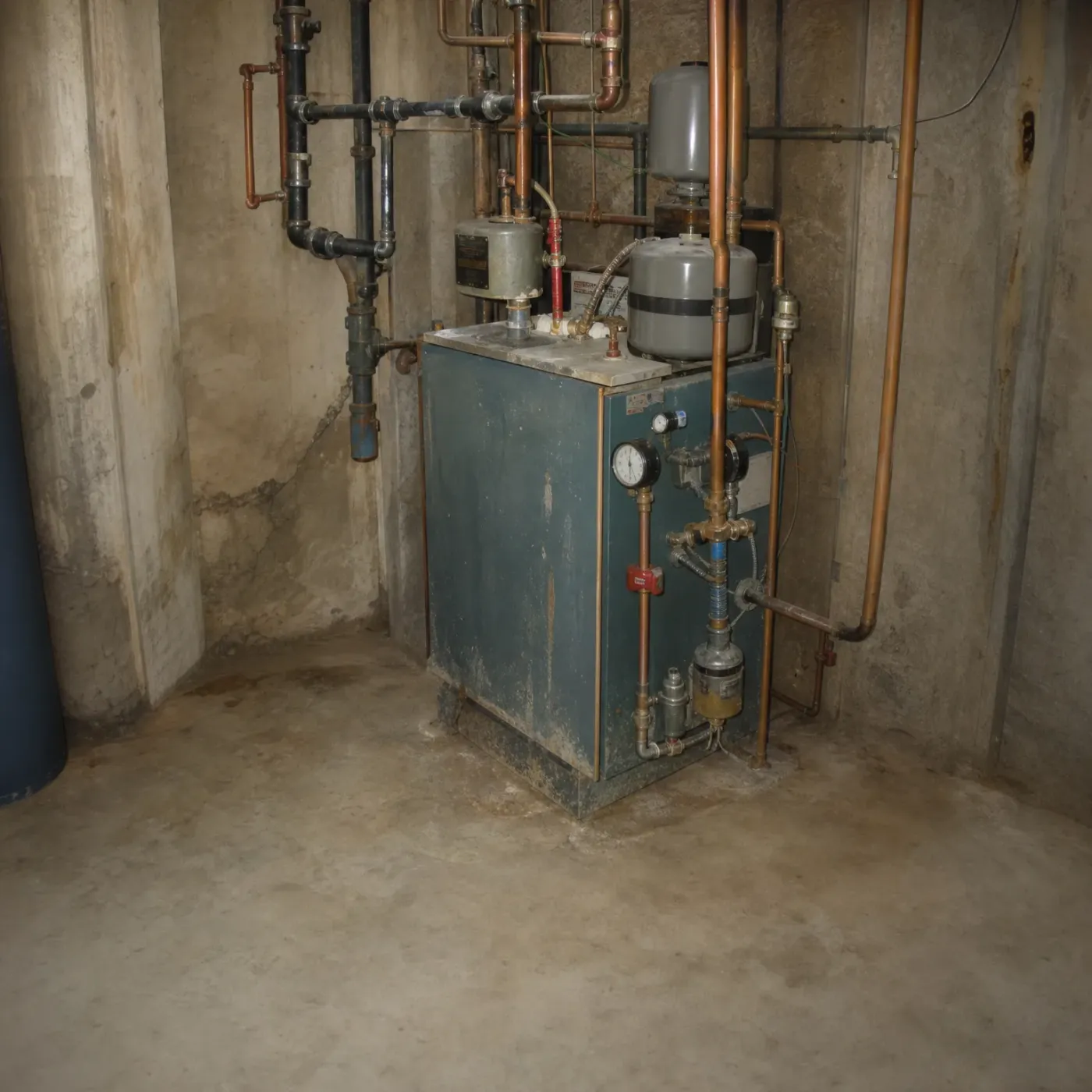
A green metal boiler with pressure gauge stands in a concrete basement corner, surrounded by copper and black iron pipes and two tank-shaped vessels.
Before you get your boiler repair
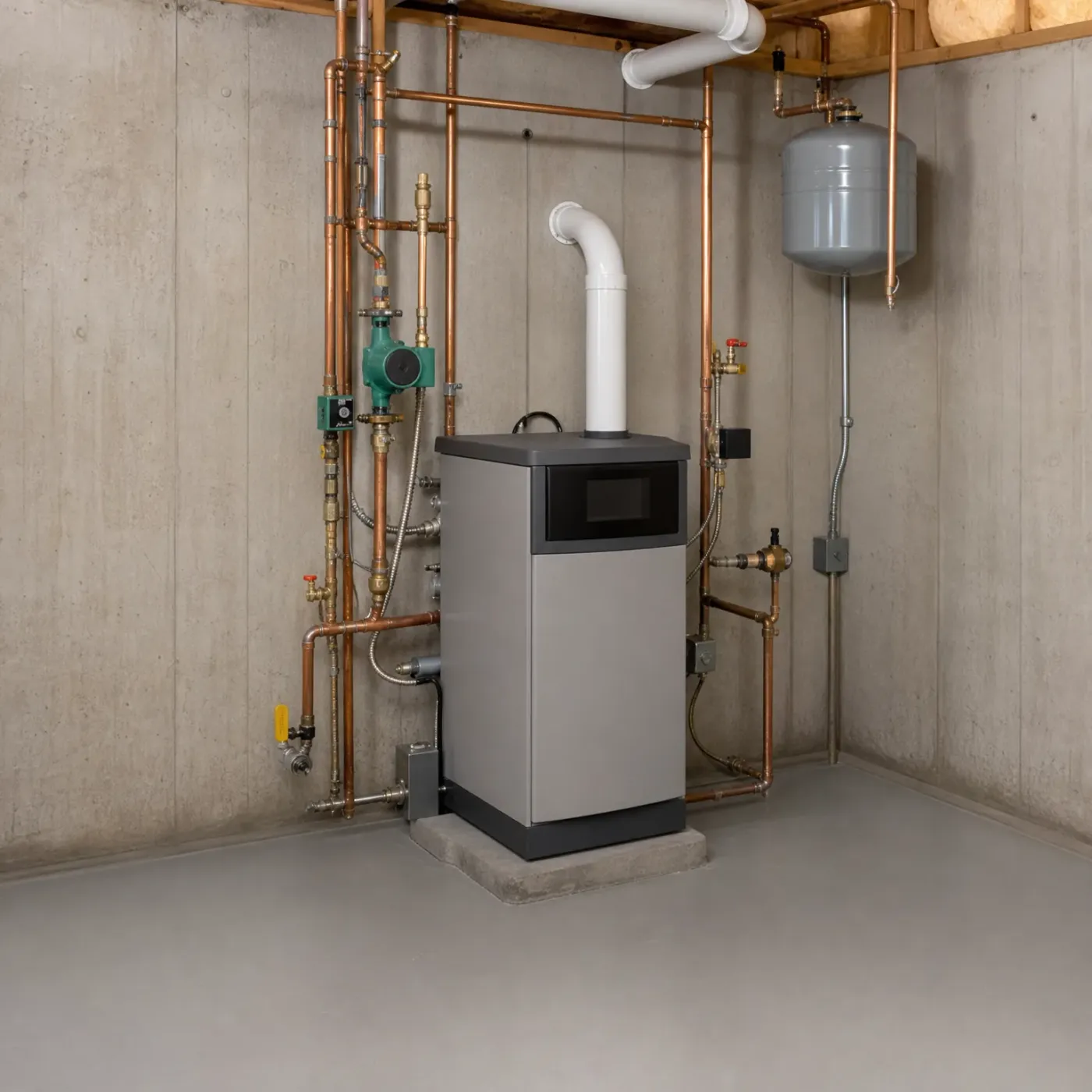
A gray floor-standing boiler on a concrete pad in a basement corner, with copper piping, a circulator pump, a white PVC flue, and a gray expansion tank mounted on the wall.
After you get your boiler repair

A local pro for your boiler repair

Only one pro gets your request, so you hear from one company.

No fee to send it, and nothing to sign.

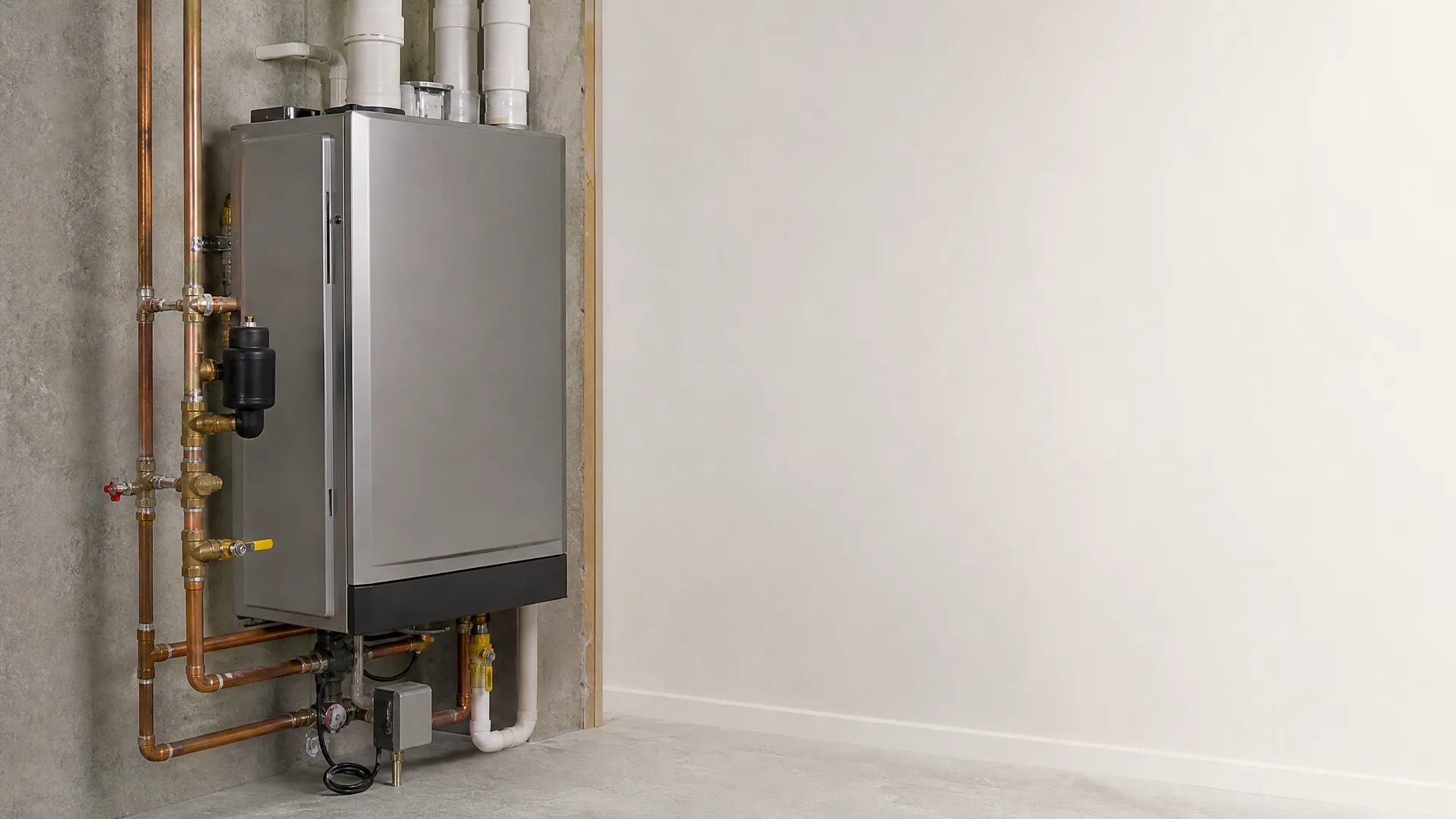
A wall-mounted grey boiler with copper pipework and white flue pipes installed against a concrete wall in an empty room with a plain pale wall to the right.

What the banging is doing to your boiler

Every time a steam pocket collapses inside the heat exchanger, it hits the metal around it. That's a small shock each time, and it happens over and over while the boiler runs. Metal fatigued this way is more likely to crack or leak at a joint than metal that heats evenly. The scale causing it also makes the heat exchanger work harder to warm the same water, since scale doesn't conduct heat the way bare metal does.

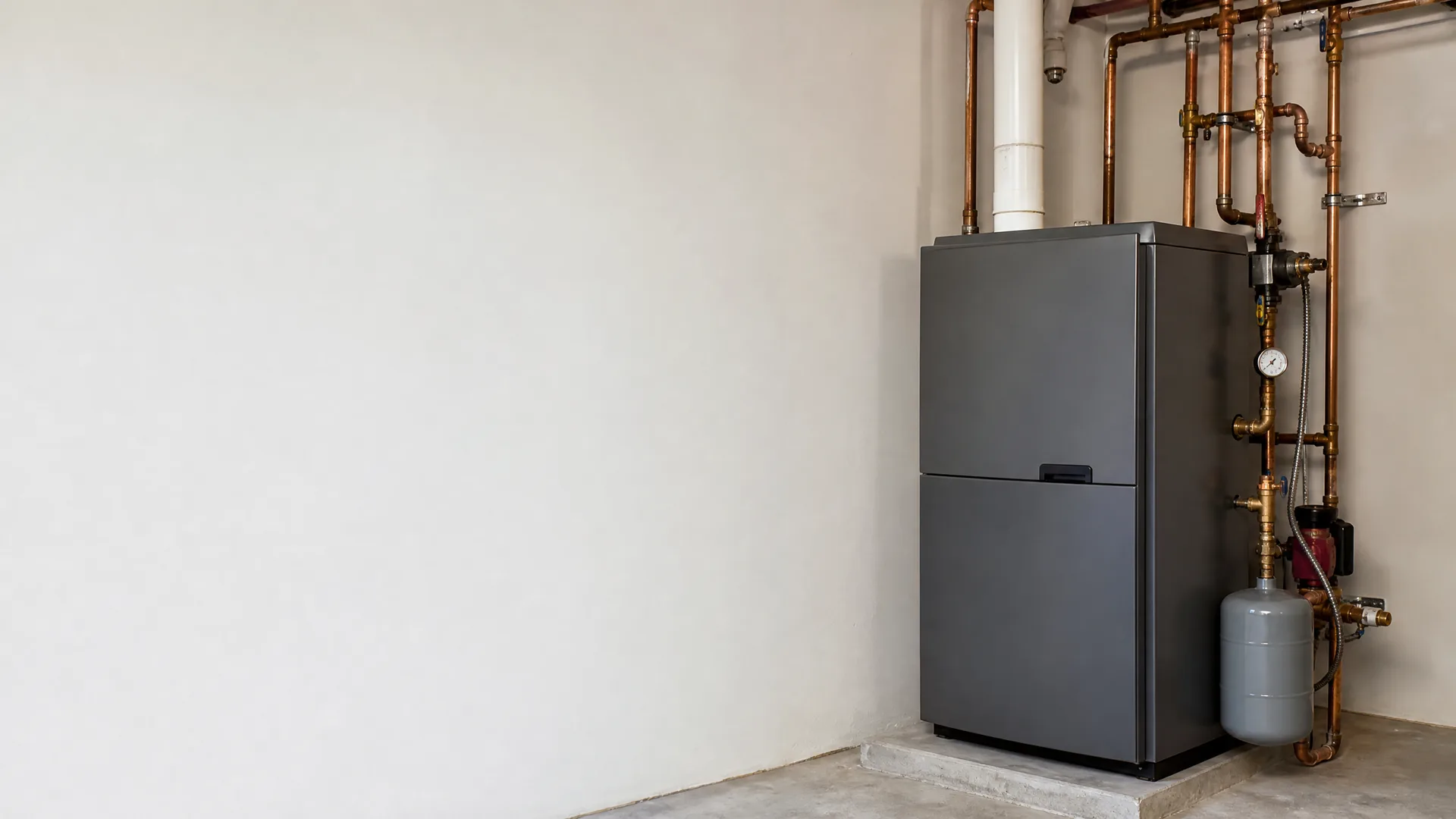
A dark grey boiler unit stands on a concrete pad against a plain light wall, connected to copper pipes, a pressure gauge, a pump and a grey expansion tank.

What it means for your heating bill

Electricity isn't cheap in Maryland, and most homes here heat with it. A boiler fighting through a layer of scale needs more run time to put out the same heat, and that run time shows up on the bill. It's a bill you pay all winter, not a one-time cost, and it keeps climbing as the scale builds up further. The noise is the warning. The bill is what happens if you leave it alone.

A woman stands in the open doorway of a white stucco house holding the dark door, facing a man in a black cap and shirt seen from behind in the blurred foreground, with a potted flowering plant beside the entry.

How the bang actually travels through the system

The knock itself happens inside the heat exchanger, but what you hear at the cabinet is that shock passing through the water and the pipe walls to wherever you're standing. That's why it can sound like it's coming from the basement floor or a pipe two rooms away. Scale doesn't build evenly, so the loudest pocket forms wherever water sits against the hottest part of the metal, which is usually low in the exchanger near the burner. A contractor who services boilers in Maryland all winter knows to check that spot first instead of guessing room by room.

What's underneath the scale matters too. Thin, even buildup sounds different from the start than scale that's flaked and left bare patches next to thick ones, and that pattern tells a technician how long this has been building and how it needs to come out. Someone local who sees this equipment every season can read that from a look at the exchanger. Getting matched with one contractor who actually works on boilers here, instead of fielding calls from several, means that read happens once and gets acted on.

Interior corner of a living room with a beige upholstered sofa and dark cushion in the foreground, a ceramic vase of leafy branches on a dark side table by a curtained window, a framed picture on the wall, and a wood-surround fireplace at right.
  1. Scale or sludge coats the heat exchanger surface over time

  2. Water trapped under that layer overheats past its boiling point

  3. Trapped water flashes into steam pockets inside the exchanger

  4. Cooler water around each pocket collapses it almost instantly

A bearded man in a blue and brown plaid flannel shirt stands indoors looking out a window at snow-covered trees, with a ceramic mug on the windowsill.
A man in a blue T-shirt sits on a light gray sofa, laughing while looking at an open laptop in the foreground, with a framed picture, lamp and potted plant behind him.

Winter nights average 27°F statewide

On a 27°F night, your boiler is running long, steady cycles to keep up. That means more hours of scale-coated metal getting hit by collapsing steam pockets, so a banging boiler on a cold Maryland night is doing more damage than the same noise would in milder weather.

NOAA nClimDiv 1991-2020 county normals weighted by homes

The bang is kettling, scale holding water against the heat exchanger until it flashes to steam and collapses. It gets worse the longer you let it run, and on a cold Maryland night that's a lot of hours. A boiler tech who works on these all winter has heard this exact knock plenty of times and knows whether it's scale buildup, a low water level, or something with the circulator before they even open the panel. Once you request a repair here, you're connected with one licensed local contractor for this job, not a handful of companies competing for your callback. That's someone who can look at your specific boiler and tell you what's actually going on inside it, instead of you guessing from the sound alone. You already caught this early, which is the part that matters most. The noise won't fix itself, and it won't wait for a convenient week either. What happens next is simple: a contractor who knows this equipment gets in touch, and you find out exactly what's going on with yours.

Interior room corner with sunlight from a window, showing peeling paint and damaged plaster on the wall above a white baseboard, a wooden cabinet with a pale bowl on top, hardwood floor and a patterned rug.
Interior corner of a room with tan walls, white profiled baseboard and window trim, a wood-plank floor in sunlight, and green foliage visible through the window.
An empty room corner with cream walls, white baseboard, two windows with deep sills showing green foliage outside, and a wood plank floor lit by sunlight.
Empty room corner with beige walls, white beadboard wainscoting, chair rail and baseboard, a window with green foliage outside, and sunlight casting leaf shadows on the wall above a wood floor.
Sunlit room corner with a multi-pane window, beige walls, white baseboard, wood floor with a woven rug, and a dark wooden cabinet holding a ceramic table lamp below a framed picture.

Get the right pro for your boiler

Your request stays with one local pro.

Find a licensed pro

Sending the form costs nothing.