




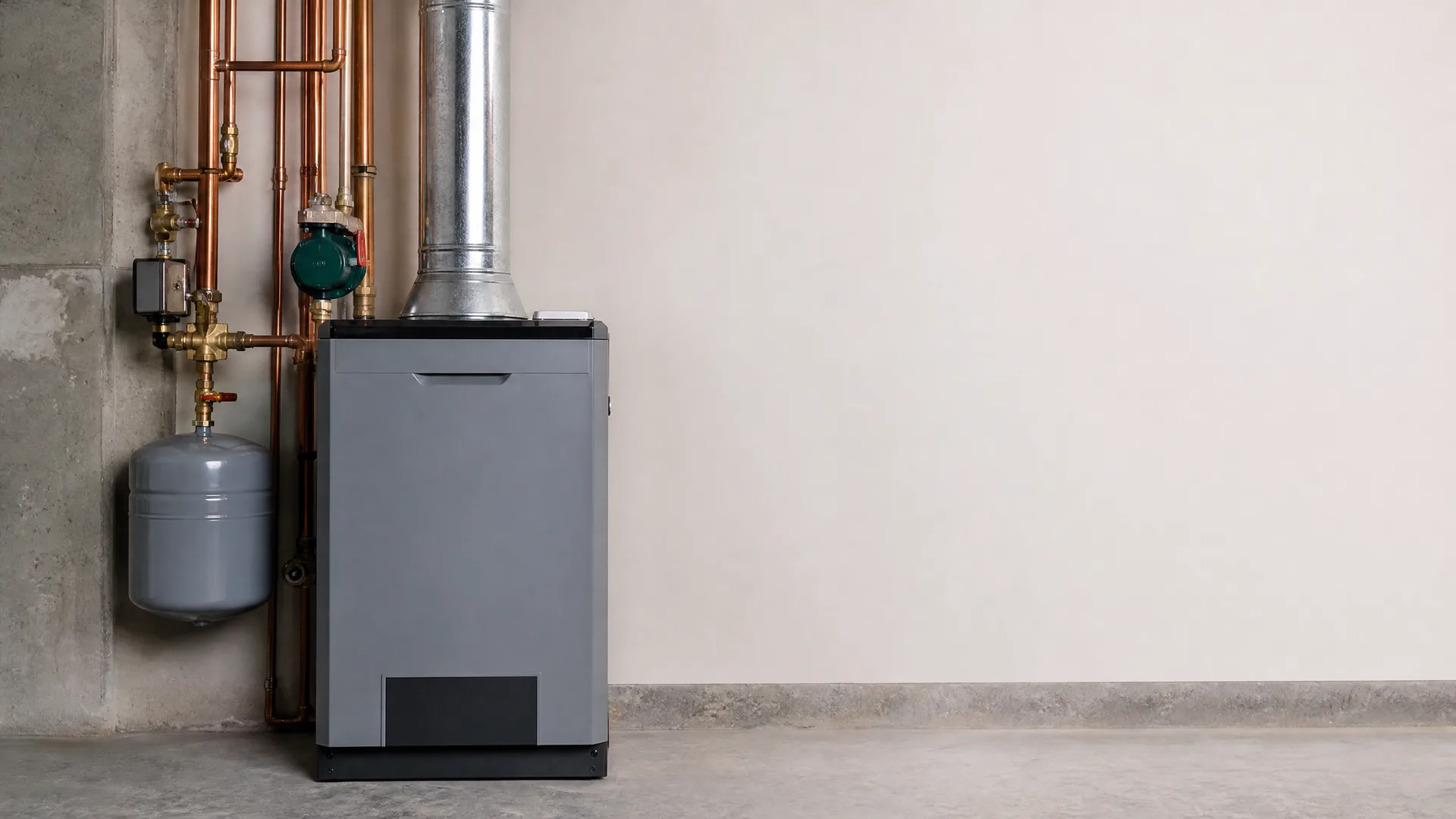
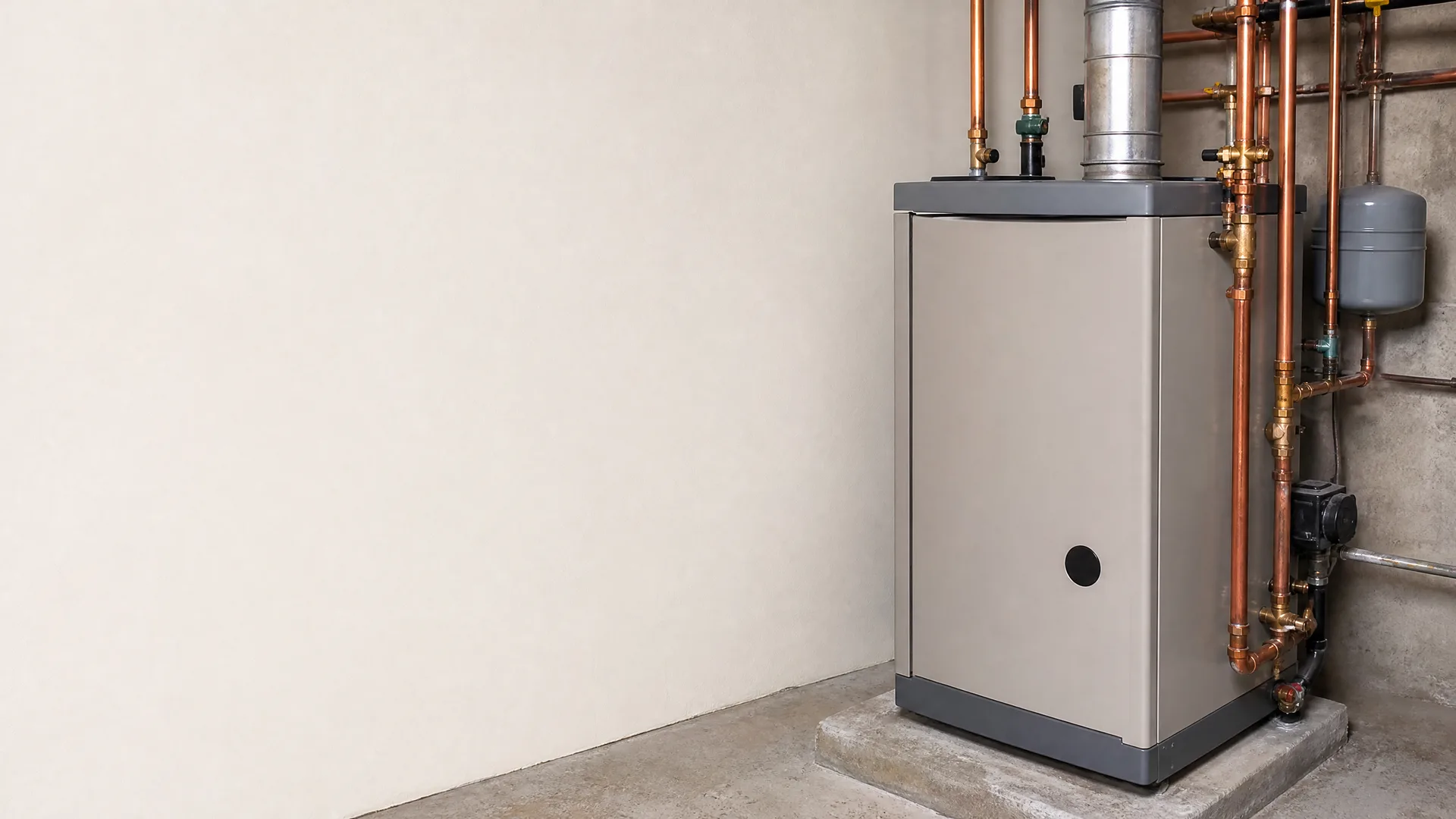
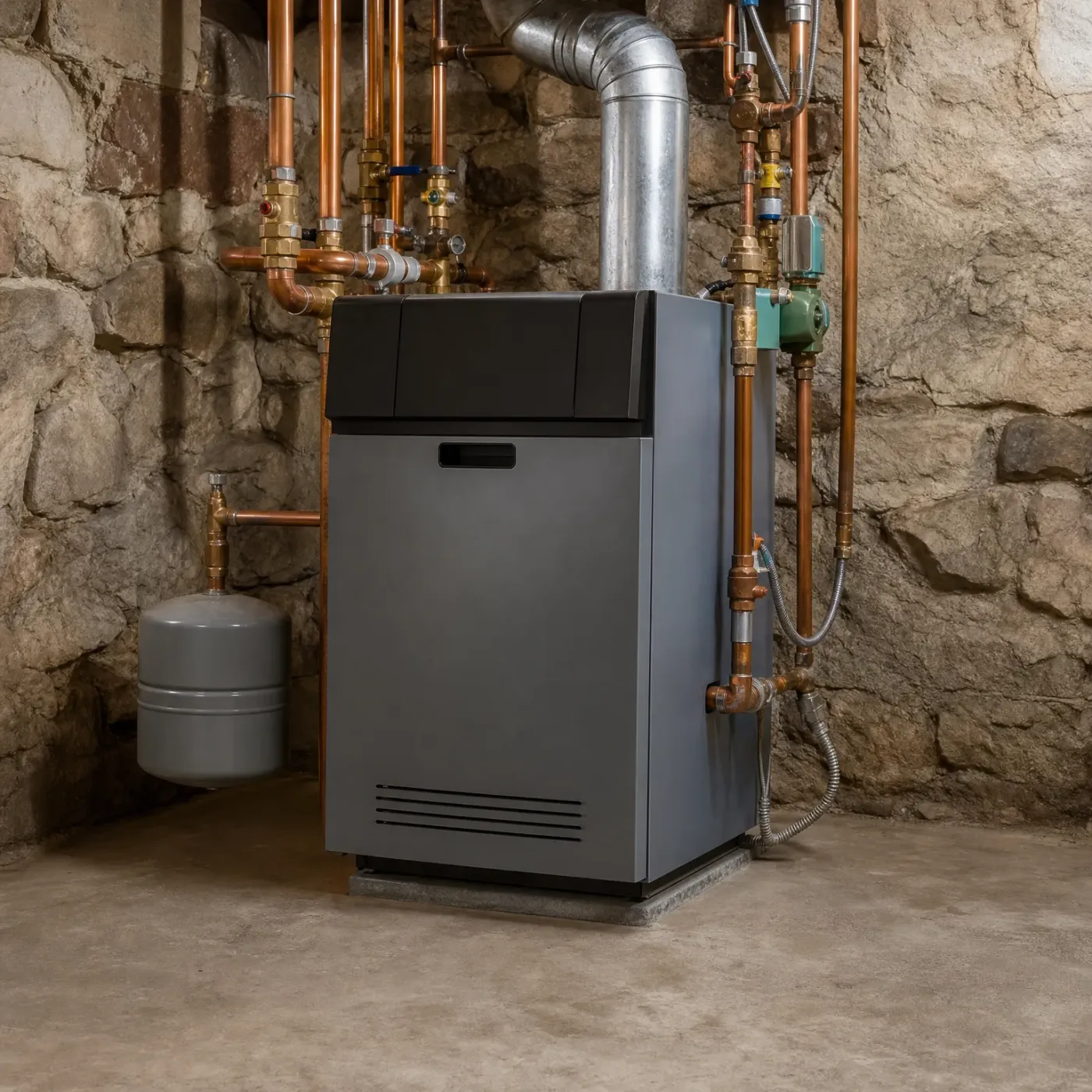
A dark grey floor-standing boiler with a metal flue stands against a concrete basement wall, surrounded by copper pipework, valves and a wall-mounted expansion tank, with ivy and a shelving unit at right.

A local pro for your boiler repair

Why your boiler is losing pressure in Maryland

A boiler that keeps losing pressure usually has a leak somewhere, or air getting into the system, or a failing valve. Finding which one it is means checking the radiators, the pipes, and the pressure relief valve. Below, what to look at first, and a local boiler contractor who can track down the cause if you'd rather not do it yourself.

Get matched

A boiler loses pressure for one of a few reasons. Water is escaping somewhere, through a dripping pipe joint, a radiator valve, or the pressure relief valve itself. Or air has worked its way into the system and needs bleeding out at the radiators. Sometimes the culprit is the expansion vessel, which absorbs the water's pressure as it heats and fails quietly when its internal diaphragm wears out. None of these show themselves right away. You might only notice the gauge reading low, or the boiler cutting out, after weeks of a slow drip you never saw. In Maryland, most homes heat with electricity rather than a boiler, so if yours runs on one, it's likely doing other work too, maybe domestic hot water, maybe radiant heat you rely on all winter. A boiler that keeps losing pressure will eventually lock out or run inefficiently, and with electric rates here what they are, a boiler working harder than it should costs more than it needs to.

Winter nights average 27°F statewide

At 27°F most nights in a Maryland winter, your boiler is running long hours to hold a comfortable temperature. That steady cycling puts more strain on the seals and joints losing water, so a slow pressure drop in January is worth checking before it turns into a bigger leak.

NOAA nClimDiv 1991-2020 county normals weighted by homes

An older oil-fired boiler with a burner unit, flue pipe, expansion tank and copper piping stands in the corner of a concrete-floored basement with weathered plaster walls.
Before you get your boiler repair
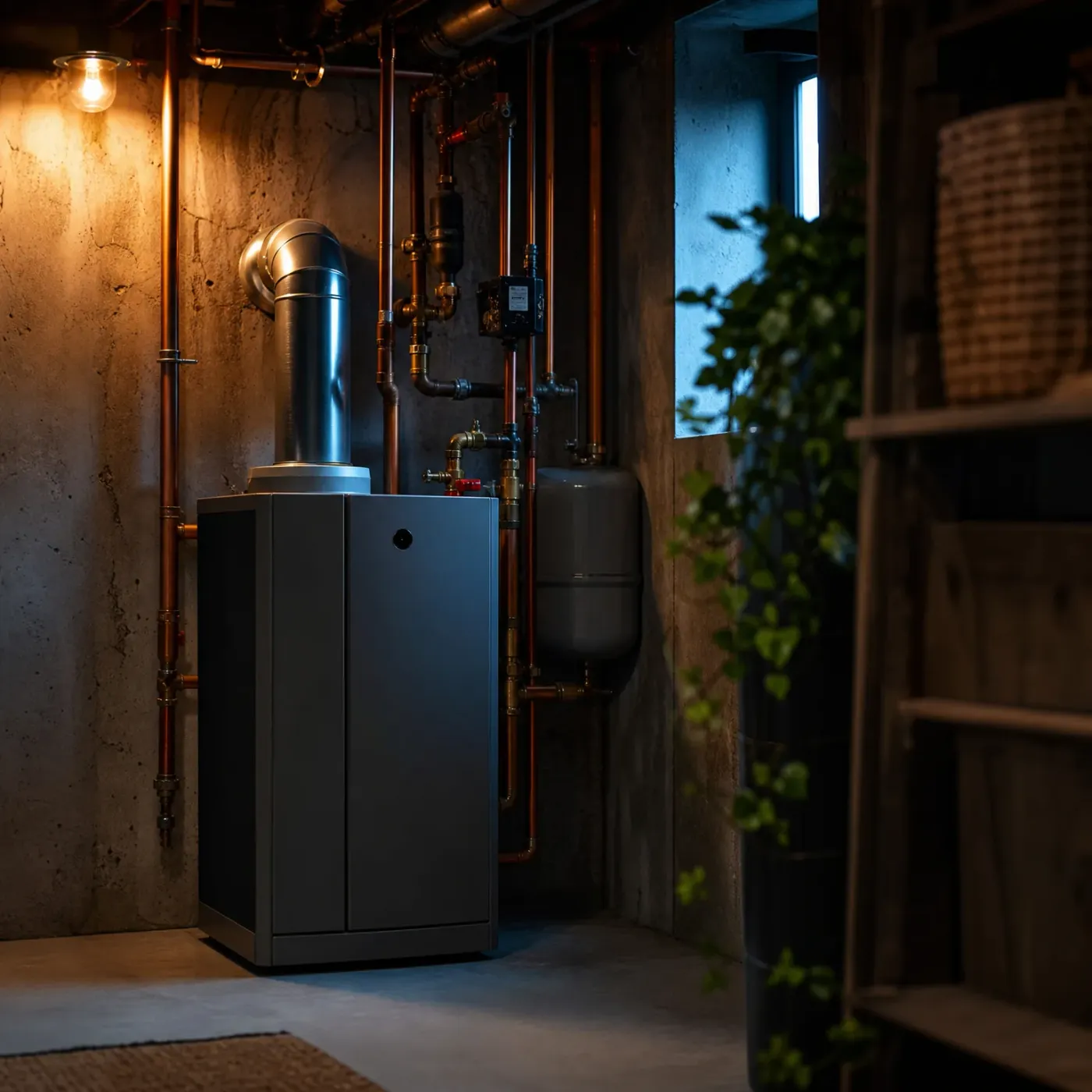
A gray boiler on a concrete pad in a basement corner, connected to copper and black pipes with a gauge, circulator pump, and gray expansion tank, beside a wood-framed wall.
After you get your boiler repair

Is this why your radiators aren't heating up right

You might notice the pressure gauge sitting low, below the green zone, or the boiler cutting off and showing a fault light instead of firing. Some radiators warm at the bottom but stay cold at the top, which usually means air, not water loss. You may hear a faint hissing near a pipe joint, or find a small puddle under the boiler or along a radiator valve. If you're topping off the pressure every week or two, the system is losing water somewhere and that spot won't fix itself. Left alone, you end up with cold rooms during a Maryland cold snap and a boiler working harder than it should to make up the difference.

  1. The system drops below the minimum pressure needed to circulate water.

  2. A low pressure switch or sensor detects the drop.

  3. The boiler locks out and stops firing to protect itself.

  4. A fault light or error code appears on the display.

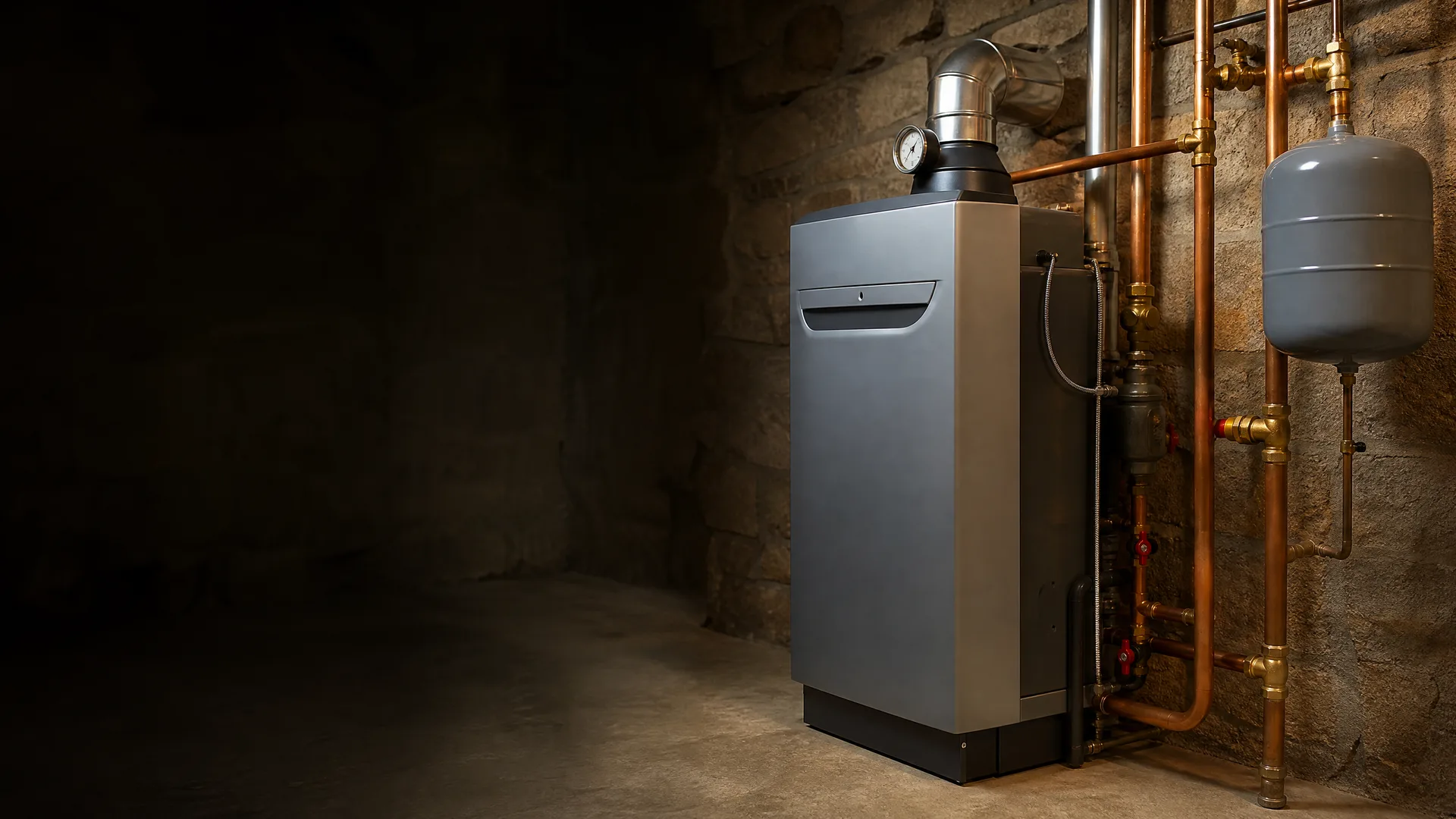
A gray floor-standing boiler with a metal flue stands against a concrete block wall, connected to copper pipes, brass valves and a gray expansion tank, on a bare concrete floor.
A boiler holding steady pressure keeps every radiator in the house fed and firing on demand.
A blue oil-fired boiler with a burner unit and pressure gauge stands in a concrete basement corner, connected to copper pipes and a metal flue.
A boiler bleeding pressure like this one will keep tripping its lockout until the leak is found and fixed.

Where does a boiler's pressure relief valve drain to?

You've spotted a trickle of water near the floor by your boiler, or a damp patch on the wall, and you're trying to figure out where it's coming from before you call anyone. The pressure relief valve has a discharge pipe for a reason, and if that pipe is dripping, that's where your lost pressure is going. Knowing where to look tells you whether this is the valve itself or something further back in the system.

It drains through a pipe that runs down to the floor or outside the house

The pressure relief valve sits near the top of the boiler and opens when pressure gets too high, letting water escape through an attached discharge pipe rather than through the valve body itself. That pipe usually ends a few inches above the floor near the boiler, or it runs outside through an exterior wall. If you see water pooling under that pipe, or staining on the floor below it, the valve has been opening and closing under too much pressure. A valve that drips even at normal pressure is usually worn and letting water through when it shouldn't, which shows up as a slow, steady pressure loss over days rather than a sudden drop.

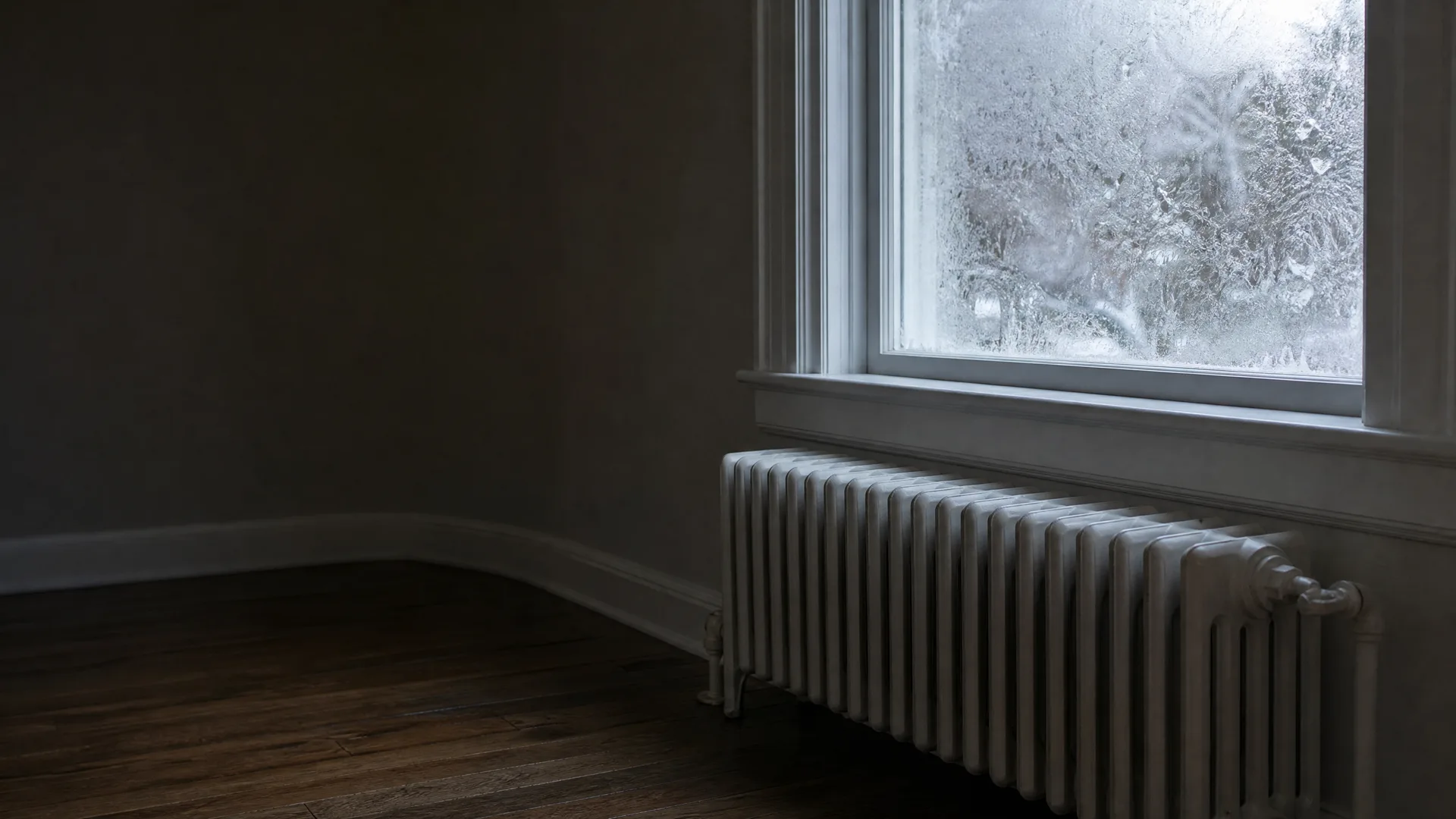
A white cast-iron column radiator under a frosted window in a dim empty room with dark walls and a wood floor, with snowy trees visible outside.

Outside it's 27 degrees and still dark. You're up before the kids, and the living room is cold in the way that tells you something's wrong before you even look at the thermostat. The radiator under the window hasn't put out heat all night. Ice has formed a thin film on the inside of the glass. You crouch down and touch the bottom of the radiator, it's lukewarm at best, and the top is stone cold. You already know the gauge on the boiler is going to be sitting low when you check it. A contractor who handles boilers around Maryland every winter would know in a few minutes whether this one's venting air or losing water somewhere.

Get the right pro for your boiler

A boiler losing pressure in a Maryland winter doesn't fix itself, and if your home heats with electricity like most around here, every hour the boiler short-cycles or locks out is an hour you're paying for heat you're not getting. Finding the leak or the faulty valve means getting hands on the system, checking joints and radiators one by one, something that takes someone who's worked on boilers like yours before. A contractor local to you sees this pattern every winter and knows where these systems tend to give out first. Your request goes to one contractor, licensed and familiar with Maryland boilers, not a handful of companies competing for your callback. Get the match started and let someone who knows this equipment take a look before a slow drop turns into a cold house and a bigger repair.

A gray floor-standing boiler with a metal flue pipe, copper piping, a circulator pump and a gray expansion tank, installed against a concrete wall.

What the expansion tank does

Every boiler has a sealed tank with a rubber diaphragm inside, separating air from water. As the water heats and expands, it pushes into the tank against a cushion of air, which keeps the system pressure steady instead of climbing. If that diaphragm splits or the air charge leaks out, the tank stops absorbing the expansion, and pressure swings low between heating cycles even when there's no leak anywhere else.

A tall grey floor-standing boiler on a concrete plinth in a corner of a room, with copper pipework, a flue, a circulator pump and an expansion vessel to its right, beside a plain cream wall.

Why joints loosen over time

Copper and steel pipe expand slightly every time the boiler fires, then contract again as the water cools. Over hundreds of cycles through a Maryland winter, the metal at a soldered joint or threaded fitting works loose just enough to seep. It's rarely a steady drip you'd notice right away. More often it shows up as a damp ring on the pipe insulation, or a faint mineral stain at a fitting near the floor.

Fix the Leak or Replace the Boiler

Repair

  • A contractor can pressure test the system and find the exact leak, whether it's a pipe joint, a radiator valve, or the relief valve itself.
  • If the fix is a bad seal or a stuck valve, repair gets the boiler back to holding pressure without replacing the whole unit.
  • A local contractor who works on boilers all winter has likely seen the same fault code your boiler is showing.
  • Repair costs less upfront than replacement, and it keeps a boiler running that may have years of life left in it.
  • If the leak is minor or the air just needs bleeding from the radiators, that's often a same-visit fix.

Replace

  • If the boiler is old enough that parts are hard to source, a contractor may tell you repair isn't worth it.
  • A boiler that keeps losing pressure after repeated repairs may have a crack in the heat exchanger that can't be patched.
  • Replacement means a new expansion tank, relief valve, and seals, so pressure problems from worn parts stop recurring.
  • With power expensive in Maryland and most homes here heating with electricity, a boiler that short-cycles from low pressure is already costing you in wasted runtime.
  • A new boiler comes with a warranty that covers failures repair on an old unit wouldn't.
A gray residential boiler on a concrete pad in a basement with stone walls, connected to copper piping, brass valves, a circulator pump, an expansion tank, and a metal flue duct.

Holding steady

This is what a boiler looks like running right. Pressure holds in the green zone, the pump moves water through the pipes and radiators without a fight, and the expansion tank does its job quietly off to the side. Nothing here is dripping or working harder than it should.
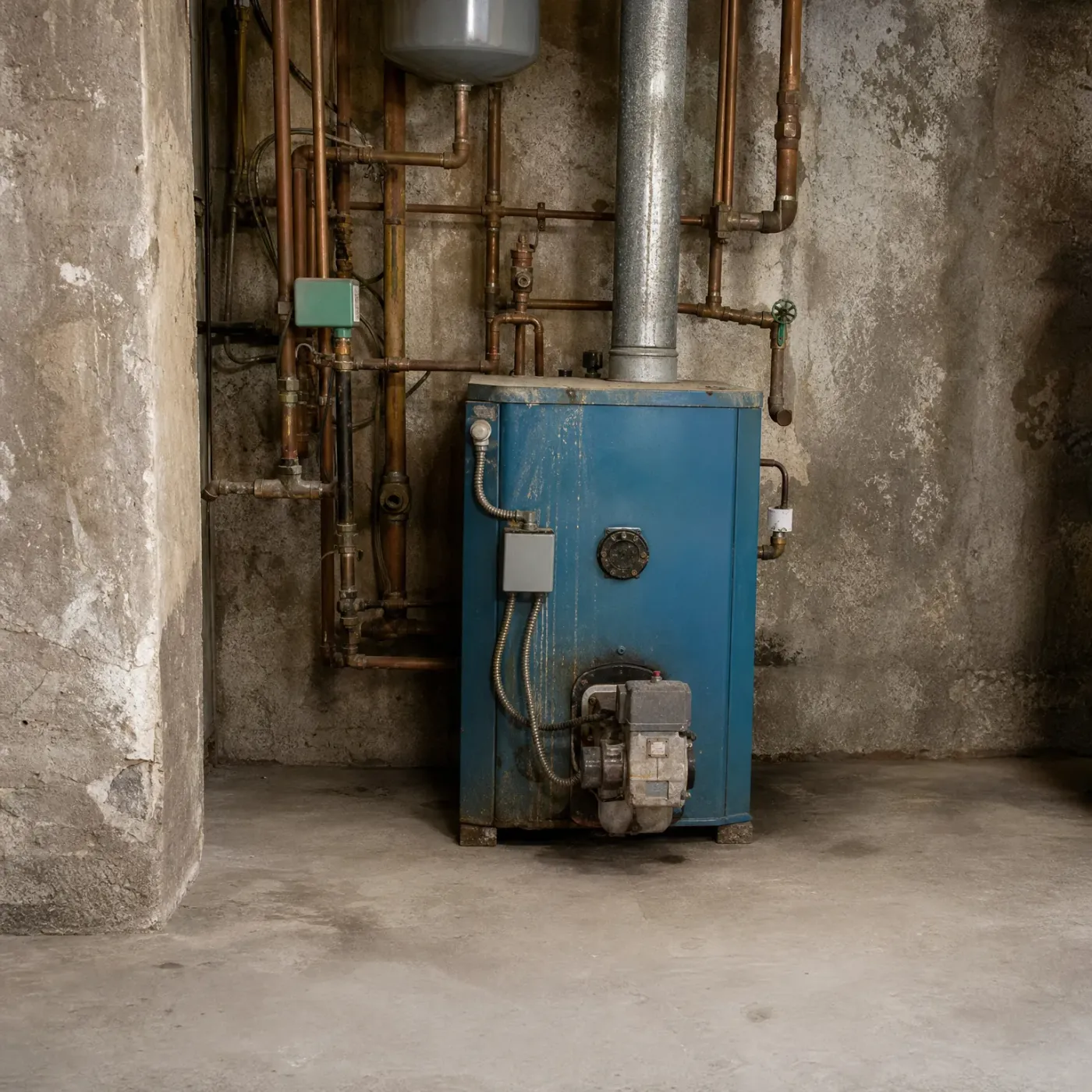

A blue cabinet boiler with a metal flue pipe and copper piping stands against a bare concrete wall in a basement with a concrete floor.

Losing pressure

This older unit is further along, and it shows. A boiler like this one has had more years for a joint to weep, a valve to wear out, or the flue connection to loosen. The pipework looks the same, but somewhere in it, water or air is getting where it shouldn't.

A gray-haired woman in a cream knit sweater stands in a dimly lit kitchen at night, looking to her right, with a round loaf of bread in the foreground and a dark window and potted plant behind her.
A woman and a sleeping child wrapped together in a cream knitted blanket on a couch, with a potted plant, framed photo and lit lamp in the background.

A boiler that holds pressure between fills can run most of a winter without you touching it, just a glance at the gauge now and then to check it's still in the green.

A boiler that drops pressure every week or two is losing water somewhere, and refilling it over and over doesn't fix that, it just buys a few more days before the same drop happens again.

A woman with long wavy brown hair in a grey ribbed sweater sits on a couch indoors, looking toward a window, with a potted palm-like plant and fireplace behind her.
A woman with long brown hair wearing a green V-neck top and beige cardigan sits on a light sofa, looking off to the side, with a dining table, lamp and framed picture in the background.
A woman with long dark hair in a cream knit sweater sits on a beige sofa indoors, looking toward a bright window with a houseplant and framed picture in the background.
A woman with long dark hair in a green knit sweater sits on a couch indoors, smiling and looking toward a window with a blurred room behind her.
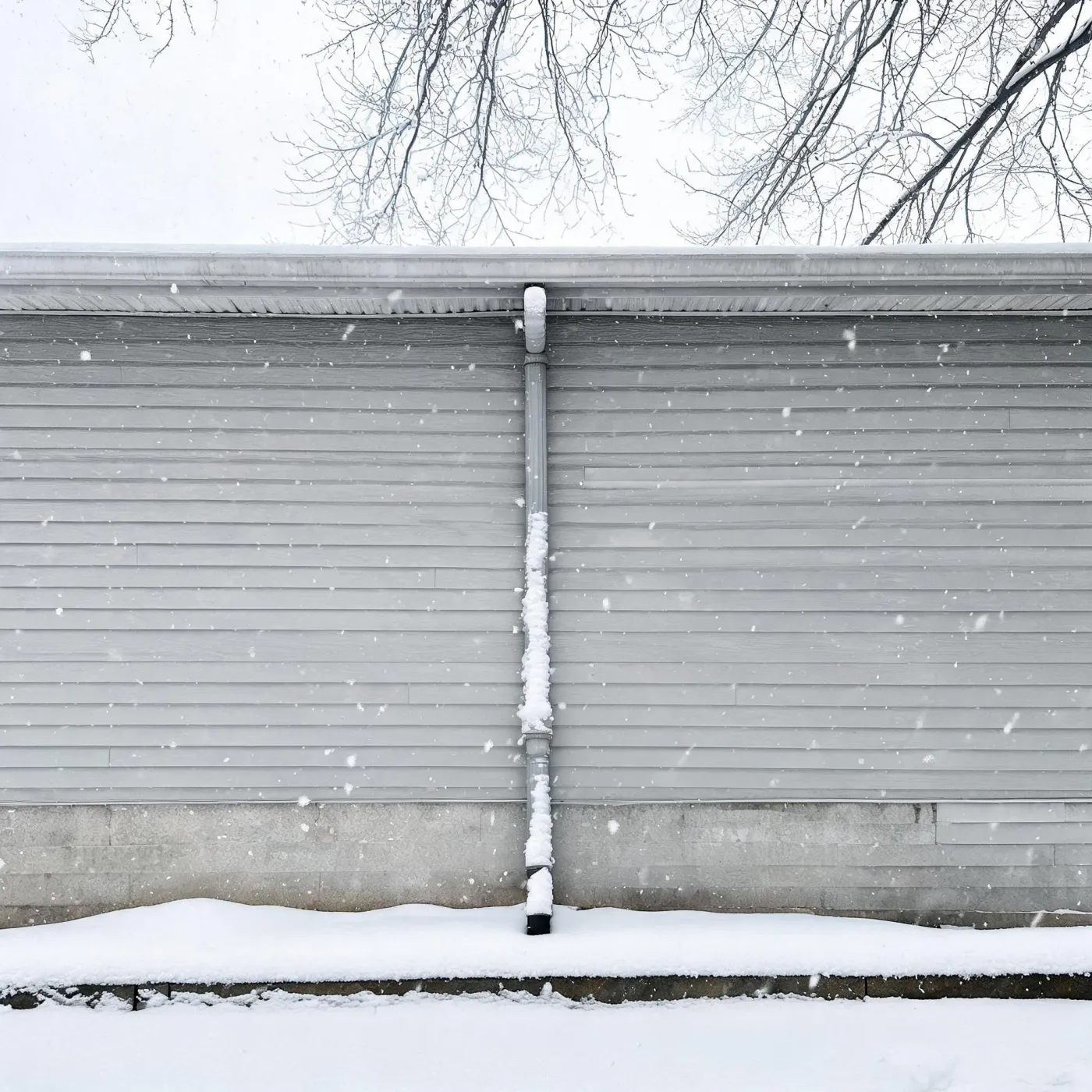
Gray horizontal lap siding on a building above a concrete block foundation, with a central downspout partly coated in snow, falling snowflakes, snow-covered ground, and bare tree branches against a white sky.

The 27°F figure already came up for what it does to your boiler's seals and joints. It also matters for what happens after a leak starts. Water escaping into a cold house doesn't just sit there, it chills the room around it, and a damp patch near a baseboard pipe can turn to a slick spot on tile faster than you'd expect. If the boiler locks out overnight when it's that cold outside, the house loses heat quickly, and you'll feel it in the room with the kids or the room where someone sits most of the day before anyone checks the gauge. A pressure drop that would be an annoyance in April is the thing you notice first in January, because there's no warm stretch to cover for it.

NOAA nClimDiv 1991-2020 county normals weighted by homes

A man seen from behind raises his hand to wave at a woman standing in the open front doorway of a single-story house with gray shingle siding, white columns and a gabled porch entry.

Pressure loss has a cause, and it can be found

A boiler that keeps losing pressure is telling you something specific: water or air is getting where it shouldn't. Not every radiator, not every winter, just this one losing its fill every week or two. The gauge, the cold spots, the lockouts are all pointing at one leak or one valve. Someone who checks radiators and relief valves for a living in Maryland homes all winter can usually narrow it down fast, because they've seen which part fails and where it tends to show up first.

From here, the next step is getting a licensed local contractor who works on this equipment matched to your boiler, so the person who calls you already has an idea of what to check. One contractor reaching out, not several, and someone who knows this system rather than a stranger guessing at it over the phone.

A gray upholstered sofa with a textured cushion sits beside a dark round side table holding a vase of green foliage, with a table lamp and sheer-curtained window behind.
A gray floor-standing boiler with a flue pipe and pressure gauge stands against a stone basement wall, connected to copper and brass piping and a gray expansion tank.

A pro who works on boilers

Step 1 of 3: Equipment