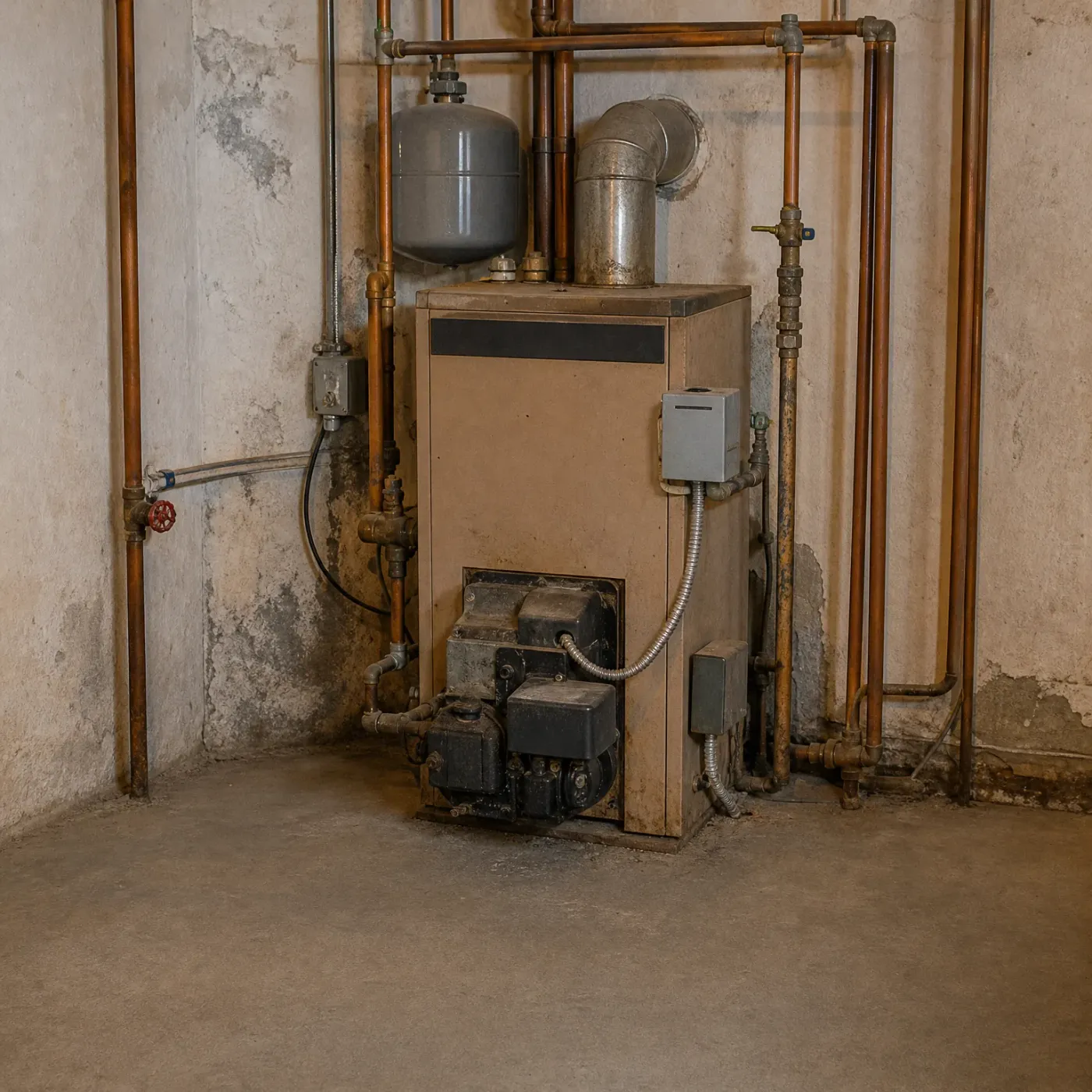
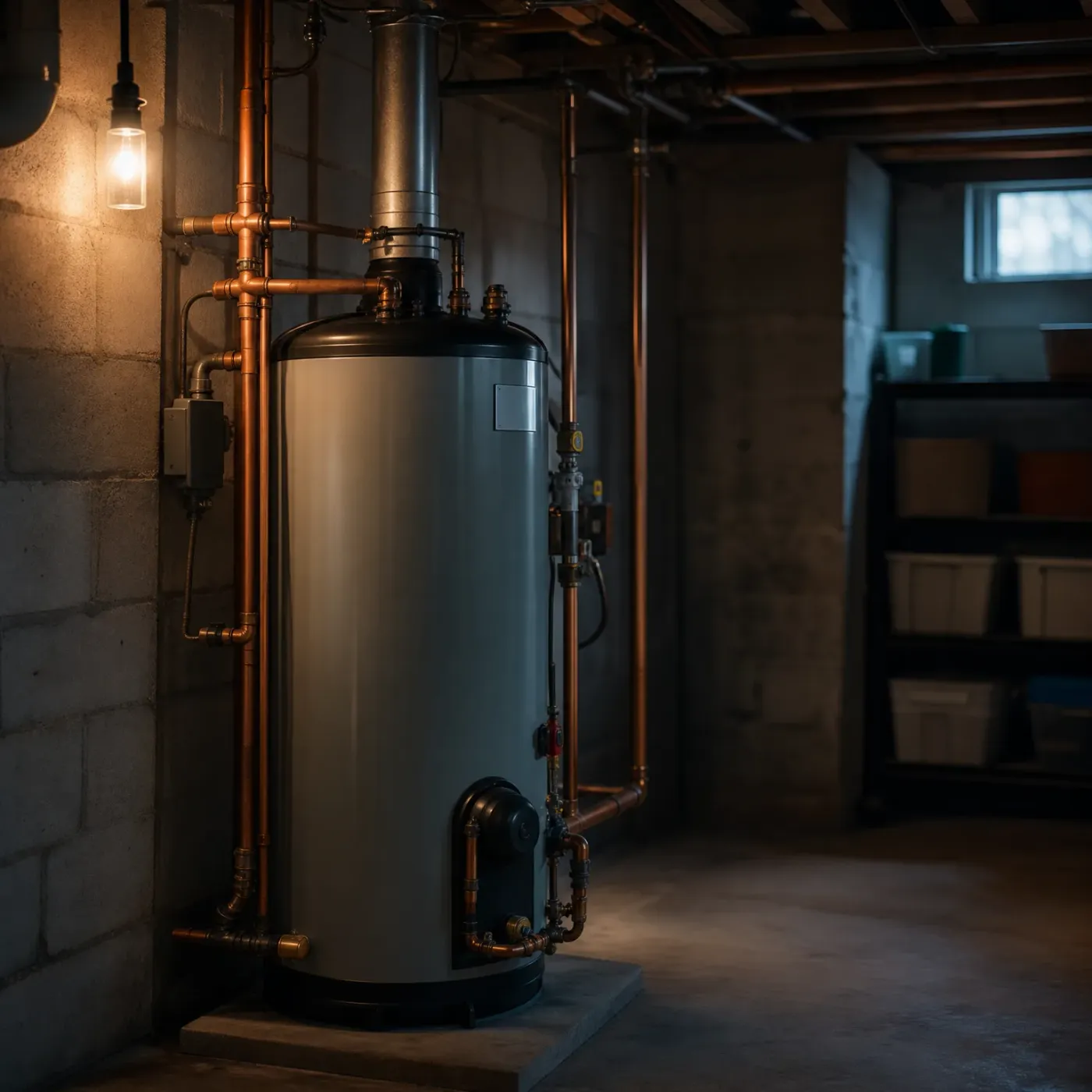
A cylindrical water heater or boiler with a flue pipe and copper piping stands on a concrete pad in a dim basement with concrete block walls, a hanging bulb at left and a shelving unit with bins at right.

Hand off the boiler problem

Why your boiler is kettling in Maryland

That rumbling, knocking sound from your boiler means something inside it is overheating. It's kettling, and it usually points to a buildup of scale or sludge inside the heat exchanger. This page gets into why it happens and what it means for your system. Once you've read it, send the form and stop hunting for a contractor yourself. No more calling around or repeating the problem to every boiler company in Maryland. Someone qualified takes it from there.

Let a pro reach out

That rumbling or knocking is water inside the heat exchanger turning to steam pockets before it can circulate. Scale or sludge builds up on the metal, and it acts like a blanket. Heat can't move into the water fast enough, so the water right against the exchanger gets hotter than the rest and flashes to steam, which collapses with a bang as cooler water rushes back in. That's the kettle noise. Maryland water carries enough minerals that scale forms over time in boilers that don't get flushed, and sludge builds up the same way in systems that have gone a while without service. Left alone, kettling stresses the heat exchanger with repeated hot and cold shock, and that's how a small buildup turns into a cracked exchanger. Catching it now, while it's still just noise, is the difference between a cleaning and a replacement.

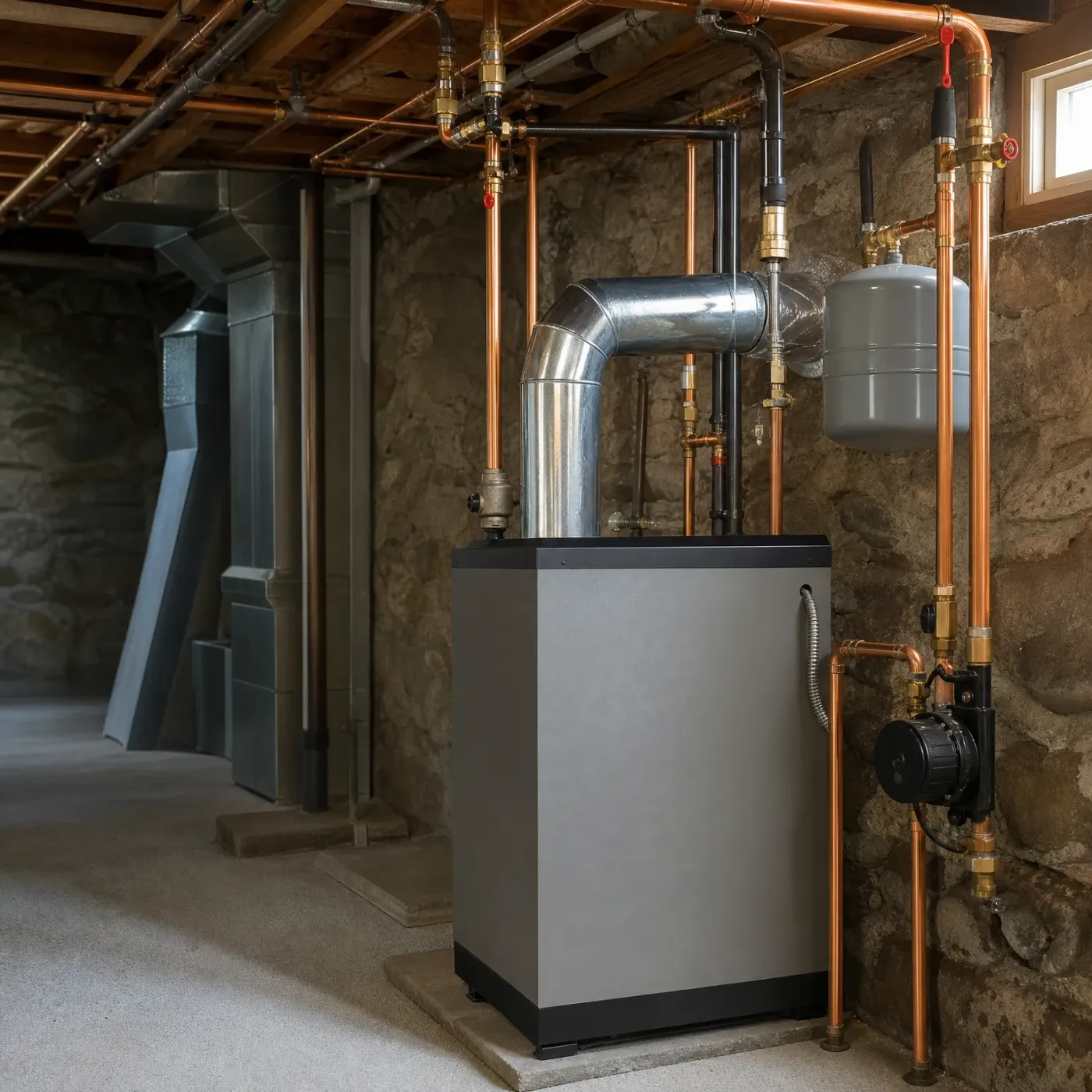
A gray boiler on a concrete pad in a basement corner, connected to copper and black pipes with a gauge, circulator pump, and gray expansion tank, beside a wood-framed wall.

Quiet and circulating the way it should

A boiler that's clear inside runs close to silent. Water moves through the heat exchanger, up through the copper piping, and the pressure gauge holds steady. No knocking, no rumble, just the pump and the burner doing their job.

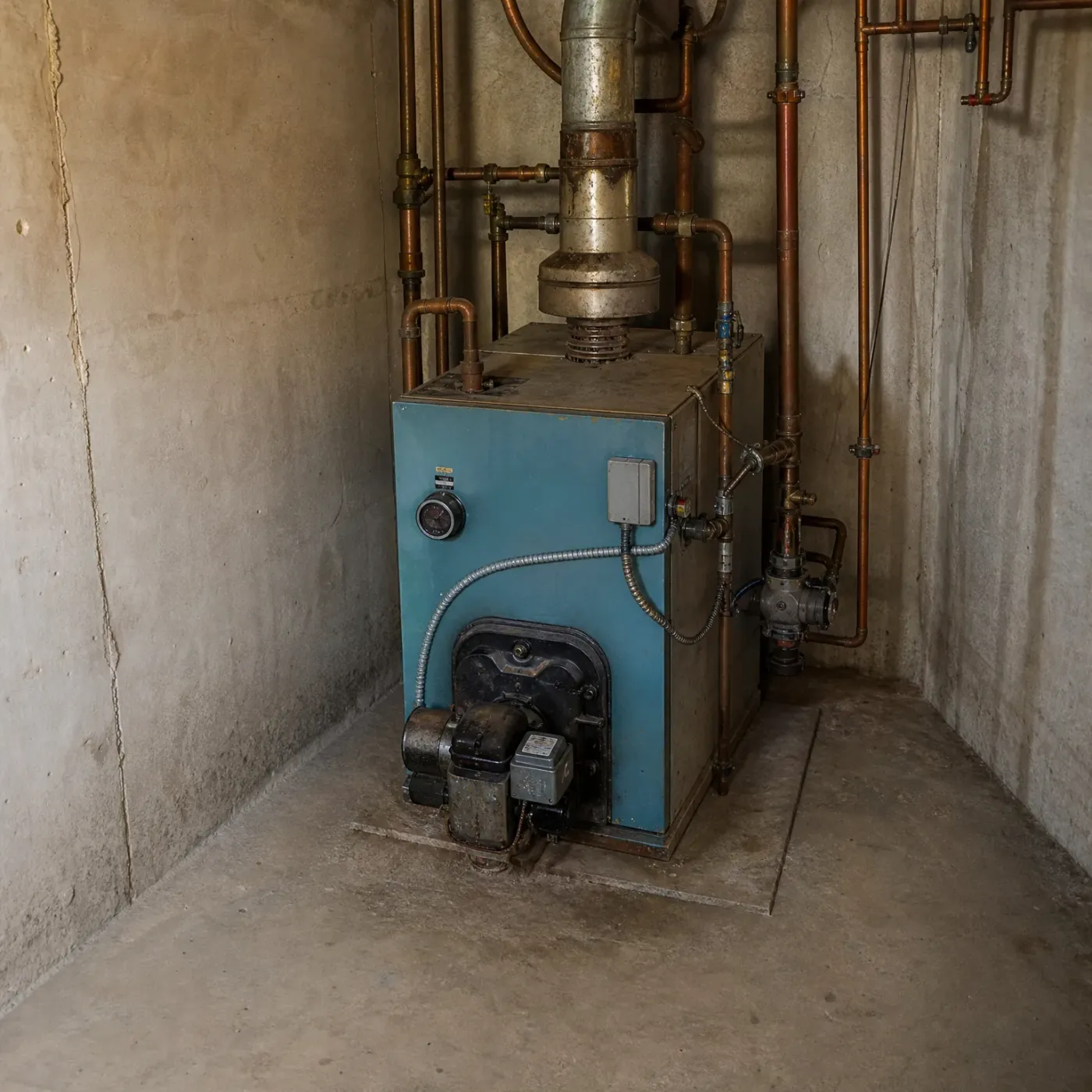
An older oil-fired boiler with a burner unit, flue pipe, expansion tank and copper piping stands in the corner of a concrete-floored basement with weathered plaster walls.

Scale built up and fighting back

Once scale coats the heat exchanger, the boiler has to work against it. The knocking you hear is steam pockets forming where the water can't carry heat away fast enough. Left alone, that buildup stresses the burner assembly and the pump under it.

A smiling man in a navy long-sleeve shirt sits at a wooden table in a kitchen and dining area, with a ceramic mug, a potted plant, and a sliding glass door behind him.
A smiling bearded man in a green henley shirt stands at a kitchen island with a gray mug, looking off to the side, with a dining area and shelves blurred behind him.
A smiling bearded man in a navy sweater sits at a white kitchen island with a ceramic mug, with open shelves, potted plants and a range hood behind him.
A smiling man in a dark olive long-sleeve shirt sits in a kitchen beside a counter with a dark mug, with a dining table, sideboard and hallway visible in the blurred background.

Scale builds up fastest in hard water, and Maryland's public systems run moderately hard to hard depending on where you are. That mineral layer doesn't wash out on its own once it's stuck to the exchanger.

Left alone, kettling gets louder and the exchanger keeps overheating in the same spot until it cracks. A boiler repair now catches it before that metal fails.

A blue oil-fired boiler with a burner unit and pressure gauge stands in a concrete basement corner, connected to copper pipes and a metal flue.
Before you get your boiler repair
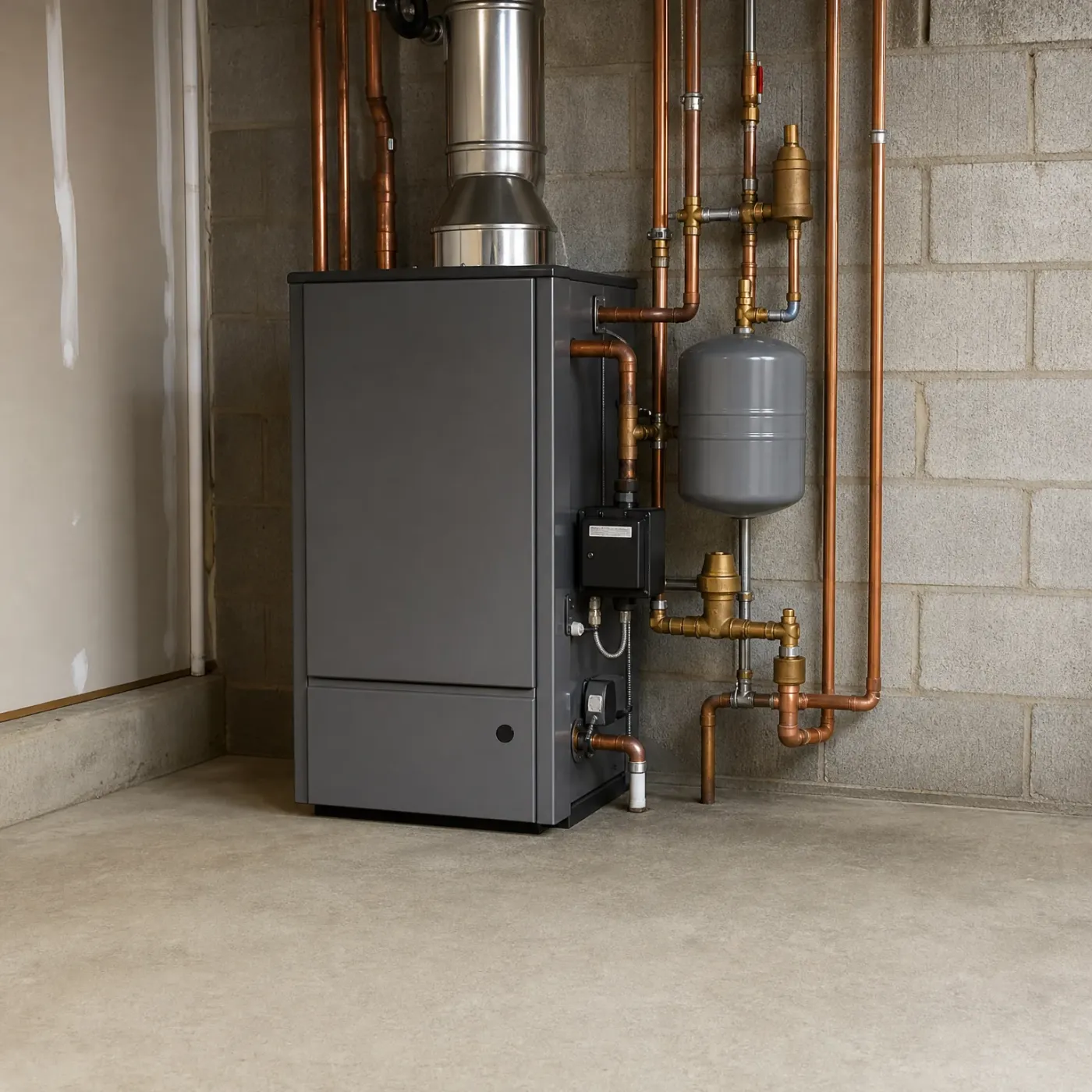
A gray floor-standing boiler with a metal flue stands against a concrete block wall, connected to copper pipes, brass valves and a gray expansion tank, on a bare concrete floor.
After you get your boiler repair

What it's doing to your heating bill

Maryland heats mostly with electricity, and electricity here isn't cheap. A heat exchanger coated in scale has to work harder to get the same heat into your water, which means longer burner cycles and more electricity used to produce the same warmth in your rooms. You'll likely notice the bill creeping up before you place the knocking and the higher cost together. The boiler isn't getting less efficient on its own. Scale is standing between the flame and the water, and your electric bill is covering the difference.

What happens if it keeps going

Kettling doesn't fix itself and the noise won't fade on its own. The steam pockets forming inside the heat exchanger put stress on the metal every time they collapse, and that stress adds up. Left alone, it can crack the exchanger or cause a leak, and at that point you're looking at a part replacement instead of a cleaning. You're the kind of homeowner who handles small problems before they turn into big ones, and this is exactly that kind of problem. Catching it now, while it's still just noise, is what keeps it small.

A smiling man in a dark blue T-shirt sits on a light gray sofa in a living room with a wooden shelf and window behind him, with a laptop edge visible in the foreground.
A bearded man in a plaid flannel shirt stands indoors looking out a frost-covered window, with a steaming dark blue mug on the wooden sill and snow-covered trees outside.
A gray boiler unit on a concrete pad in a stone-walled basement, connected to copper piping, brass valves, a circulator pump, an expansion tank, and a metal flue vent.

Send one request and you're done looking

Describe your boiler job once, to one pro.

Send it once and finding someone is no longer on you.

Answer a few questions

There's no charge for the request.

Winter nights average 27°F statewide

At 27°F on a winter night, your boiler is cycling on for hours at a stretch, not just running in short bursts. That's a lot of time for a scaled heat exchanger to sit there struggling to transfer heat, which is exactly when kettling gets loudest and the strain on the system adds up.

NOAA nClimDiv 1991-2020 county normals weighted by homes

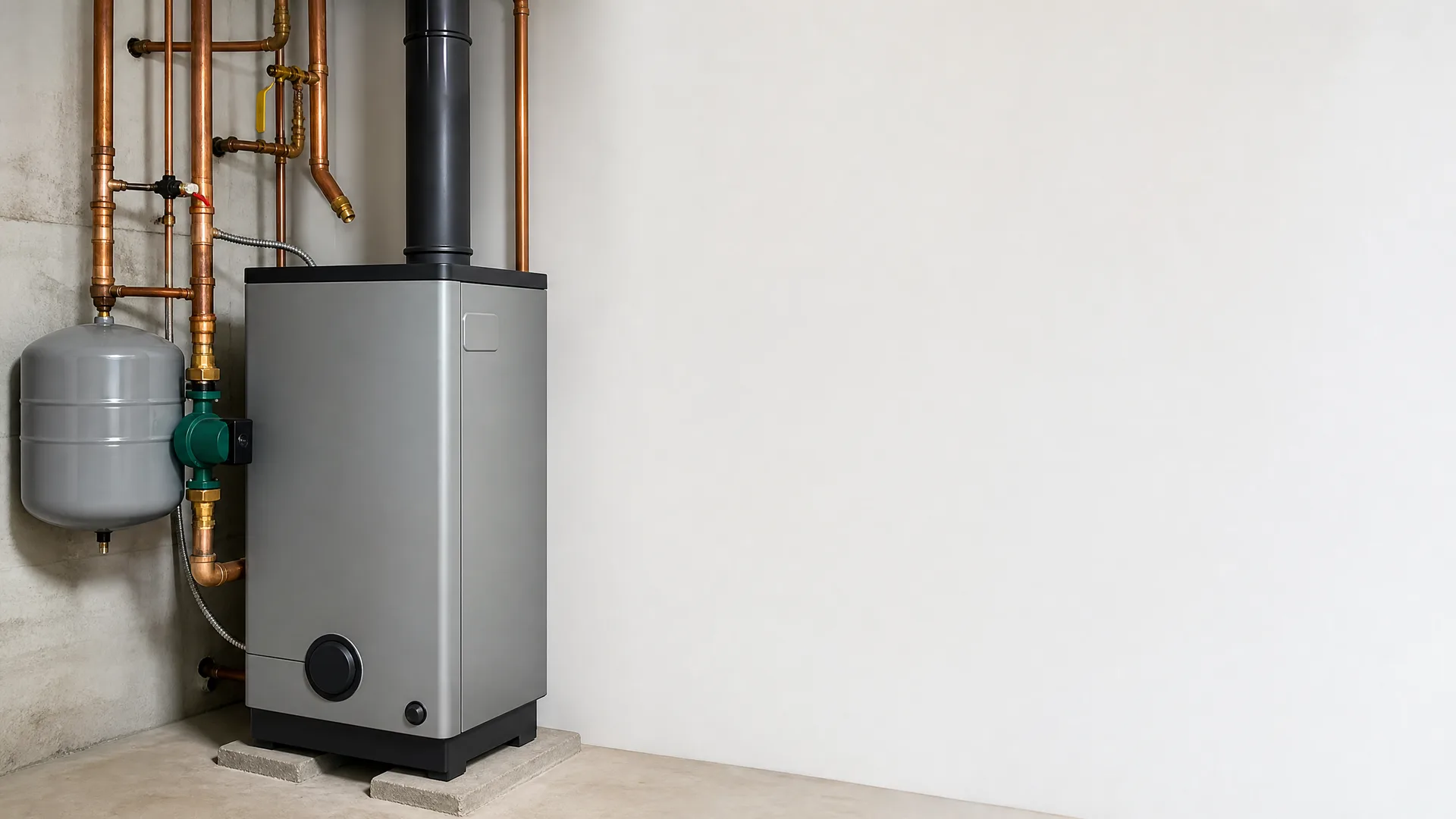
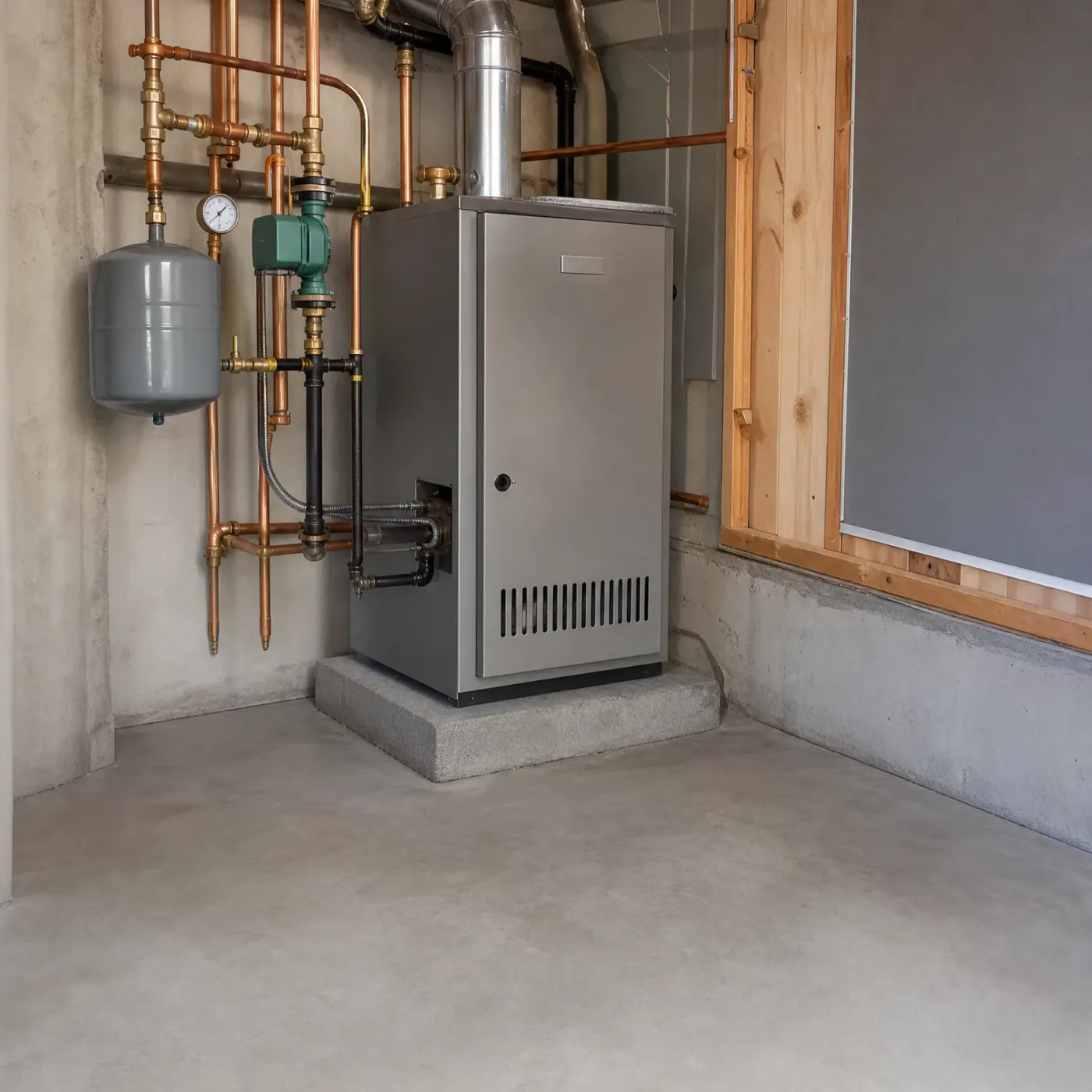
A gray floor-standing boiler with a black flue pipe stands on concrete blocks in a corner, connected to copper pipes, a green circulation pump, and a gray expansion tank on the wall.

Ignore it and it gets worse

Kettling doesn't fix itself. The scale keeps building every time the burner fires, so the noise you hear tonight is quieter than the noise you'll hear in a month. Left alone, the heat exchanger can crack under the stress of hot spots forming against the metal, and that turns a repair into a replacement. Some homeowners let it run for a season because the heat still comes on. The boiler is still heating the house, but it's working harder to do it, and that hot spot against the metal is the same thing that eventually splits an exchanger.

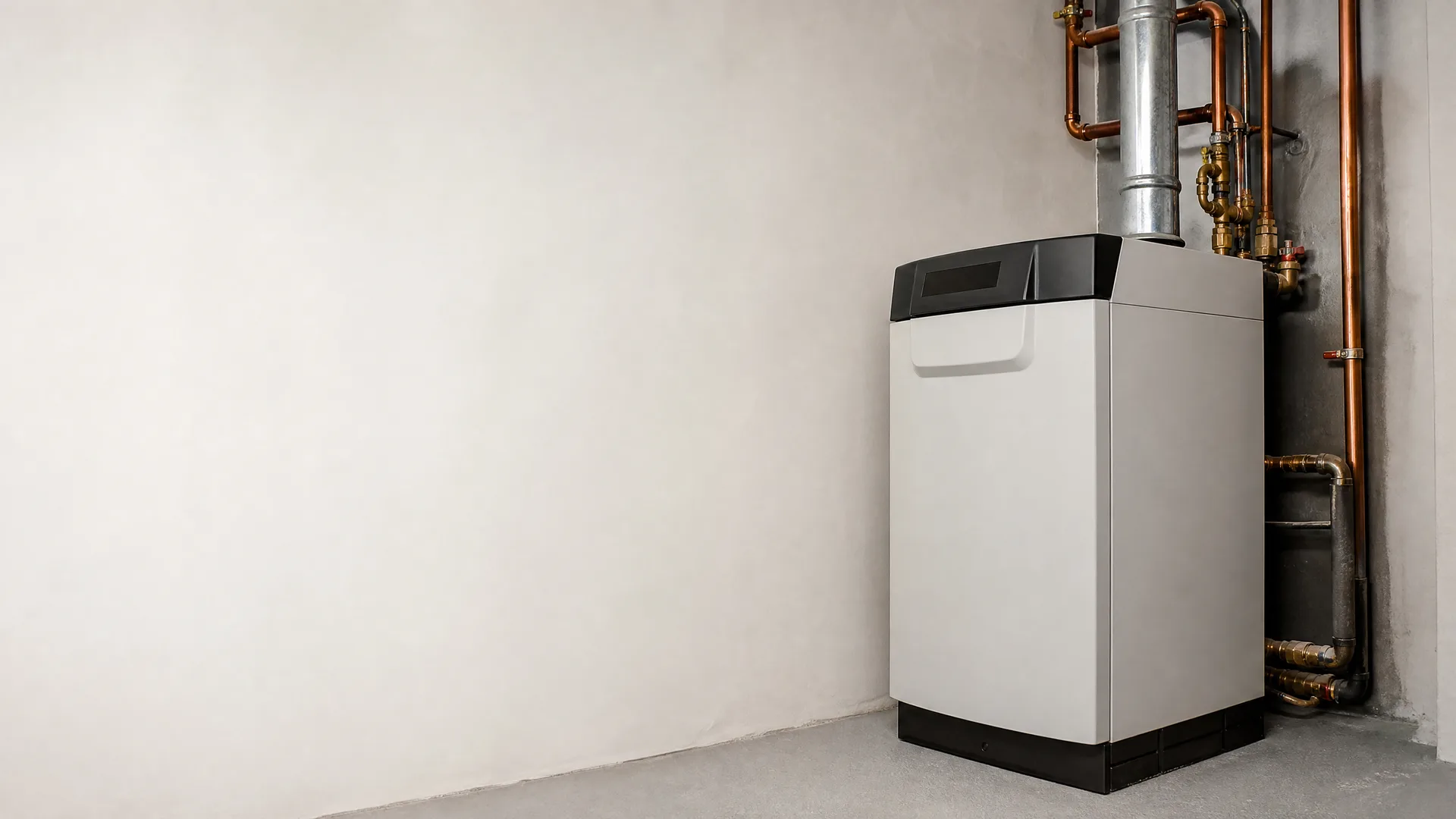
A white and black floor-standing boiler in the corner of a bare plastered room, with copper and metal pipes running up the wall behind it.

Call it in early instead

You're the kind of homeowner who deals with small problems before they're big ones, so you're already ahead by noticing the sound and looking into it. Once you send the form, you're done hunting. No calling three contractors, explaining the knocking sound three separate times, and sitting with quotes trying to guess who's honest. Someone licensed gets matched to your job and takes it from there. The noise gets diagnosed, the scale gets addressed, and your boiler goes back to doing its job quietly, without you having to manage the search for who does it.
Why does my boiler only make the kettling noise sometimes, not all the time?

You've noticed the noise comes and goes. Some nights the boiler runs quiet, other nights it knocks and rumbles like it's about to come apart. If it were always doing it, you'd have called already. The on-and-off pattern makes it tempting to wait and see, but that pattern is telling you something specific about where the scale sits and how hard the burner is working that cycle.

It depends on how hard the burner is firing and how much water is moving past the scale

Kettling shows up worst when the heat exchanger is working hardest, on the coldest nights when the burner runs long cycles to keep up. On milder days the burner fires shorter and water moves past the scale fast enough that steam pockets don't build the same way. The noise isn't random. It's the same scale sitting in the same spot, reacting differently depending on the load. As more scale builds up, the mild nights stop staying quiet too, and the noise starts showing up at lower and lower burner output until it's there every time the boiler runs.

View from under a covered porch with a white column toward a red brick house with a dark door, with falling snow, snow-covered ground and bare trees in the background.

Winter nights average 27°F statewide, per NOAA. On a night that cold, your boiler isn't cycling on and off, it's running long stretches to keep the house warm. Each of those long runs pushes hot water through the heat exchanger for hours at a time. If scale has built up on the metal, that's hours of the water right against it overheating into steam pockets instead of moving through cleanly. You'll hear it as knocking or rumbling that gets worse as the night goes on and the burner keeps firing to make up the difference.

NOAA nClimDiv 1991-2020 county normals weighted by homes

A closed dark laptop and a ceramic mug of coffee on a wooden dining table, with wooden chairs, a dark kitchen cabinet with cutting boards and a potted plant, and a leafy plant by a window in the background.

Kettling means scale is already there

The noise is the answer. Scale or sludge has built up on the heat exchanger, and the water trapped against it is turning to steam before it can circulate. That's what you're hearing. It won't quiet down on its own, and running the boiler through another cold stretch only adds another layer.

Right now you'd have to find a boiler contractor, call around to see who's free, explain the knocking and the rumble again to each one, then sit with a stack of quotes trying to tell them apart. Send the form instead and that part is off your plate. Someone licensed to work on your system takes it from there, and you're not the one chasing it down anymore.

Interior corner of a dining room with a round wooden table, a ceramic vase holding olive branches, a dark spindle-back chair near a curtained window, and a sideboard with a lamp against beige walls.
A single-story stucco house at dusk with a lit paver walkway lined by low path lights, desert plants and boulders in front, and distant mountains under an orange and blue sky.

Boiler Repair

Finding a pro stops being your job

Step 1 of 3: Equipment
  • A ceramic vase holding leafy green branches and a shallow wooden bowl sit on a wooden window ledge beside a sunlit window, with a cream upholstered chair and knit throw in the foreground.
    • Tell a local repair pro what your boiler is doing.
    • Describe your boiler job, and a local pro who handles it gets in touch.
  • Sunlit living room corner with a beige upholstered sofa, a round wooden side table holding a ceramic vase of olive branches, linen curtains at a window, a floor vent in the baseboard, and a woven jute rug on hardwood flooring.
    • Get the boiler repair search off your mind today.
    • Once you send the form, finding a pro is off your list.
  • A wooden side table with a single drawer holds a shallow carved wood bowl and a white ceramic vase of green eucalyptus stems, beside a window and an upholstered chair draped with a cream knit throw.
    • Explain the job once and skip repeating it on every call.
    • Skip searching for a boiler pro and answer a few questions instead.
  • Corner of a house with horizontal siding, a white-framed window and stone veneer base, beside a covered entry with wooden steps, a potted plant, mulched beds of green shrubs and a flagstone path.
    • Your request goes to one pro, not a list of companies.
    • The pro who reaches out is licensed in Maryland.