Running the way it should
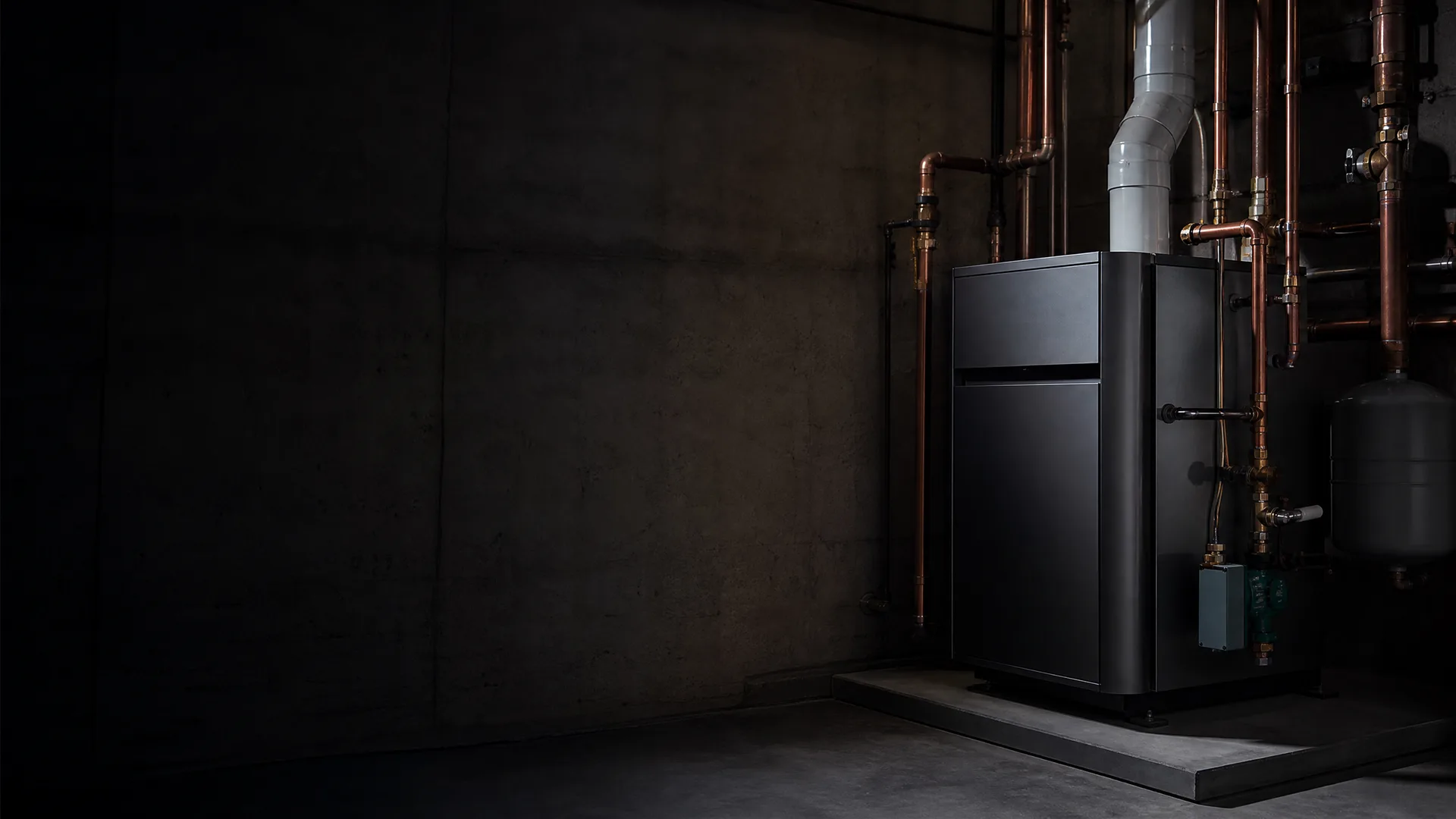
The pipes are dry, the fittings are tight, and the pumps run quiet. A boiler like this holds pressure on its own and recovers fast between cycles. It can carry a Maryland winter without you thinking about it once.
 Get my match
Tell a local repair pro what your boiler is doing.
A boiler that's struggling in January doesn't usually give much warning. It might just be a knocking sound, or a room that stays cold no matter how long the heat runs, or a pilot that won't hold. In most homes here that run on electricity, the boiler is doing work that costs more to replace with something else, so when it starts slipping, you notice it on the bill before you notice it anywhere else.
Maryland winters ask a lot of an aging boiler. Cold snaps push it to run longer and more often, and that's when a weak part that's been getting by finally gives out. The signs worth paying attention to are the ones that show up again and again this time of year: short cycling, uneven heat room to room, water around the base, or a pilot light that keeps going out.
None of that tells you on its own whether the boiler needs a repair or whether it's close to done. That takes someone standing in front of it, listening to it run, checking the pressure and the venting. What it does tell you is that waiting until the coldest week to find out is a bad bet.
This is where getting matched with a contractor who actually works on boilers in Maryland homes matters. Someone who services this equipment every winter here has seen which parts tend to go first in a hard freeze and what a boiler sounds like right before it quits. You'd be connected with one contractor, licensed and local, not a handful of companies competing for your callback.
That contractor reaches out to you directly, with your boiler and your situation in mind, not a general pitch. From there, you'll know a lot more than you do now about whether this is a fix or something bigger.
A boiler that won't make it through a Maryland winter usually tells you with uneven heat first. Some rooms stay warm, others don't, and the boiler runs longer to make up the difference. Look at the water too. If it leaks around the base or the pipes, or if you see rust on the tank, the metal is wearing through from the inside and that doesn't reverse itself. A pilot light that keeps going out, or burns yellow instead of blue, means it isn't burning fuel the way it should. Banging or kettling sounds mean sediment has built up inside, and that makes the boiler work harder to heat the same water. Any one of these on its own might just need a repair. Several together, especially as the cold months set in, mean the boiler is nearing the end of what it can do, and you're better off knowing that now than finding out in February when it stops.





The pipes are dry, the fittings are tight, and the pumps run quiet. A boiler like this holds pressure on its own and recovers fast between cycles. It can carry a Maryland winter without you thinking about it once.

Rust or white crust on a fitting means water has been escaping slowly for a while. A flue pipe that's rusted through or coated in soot isn't venting the way it should. Either one means the unit is wearing out faster than it's keeping up.
Maybe it's the sound. A bang or knock when the burner kicks on, or a low hum that wasn't there last winter. Maybe it's the heat itself, uneven from room to room, or the boiler running long stretches without the house feeling any warmer. Check the floor near the base and along the pipes for water or rust stains. Check the pressure gauge too; if you're adding water to it more than you used to, something is letting it out. None of this means the boiler is finished, but ignored through a Maryland winter, a small leak or a pressure problem tends to turn into a cold house and a bigger repair.
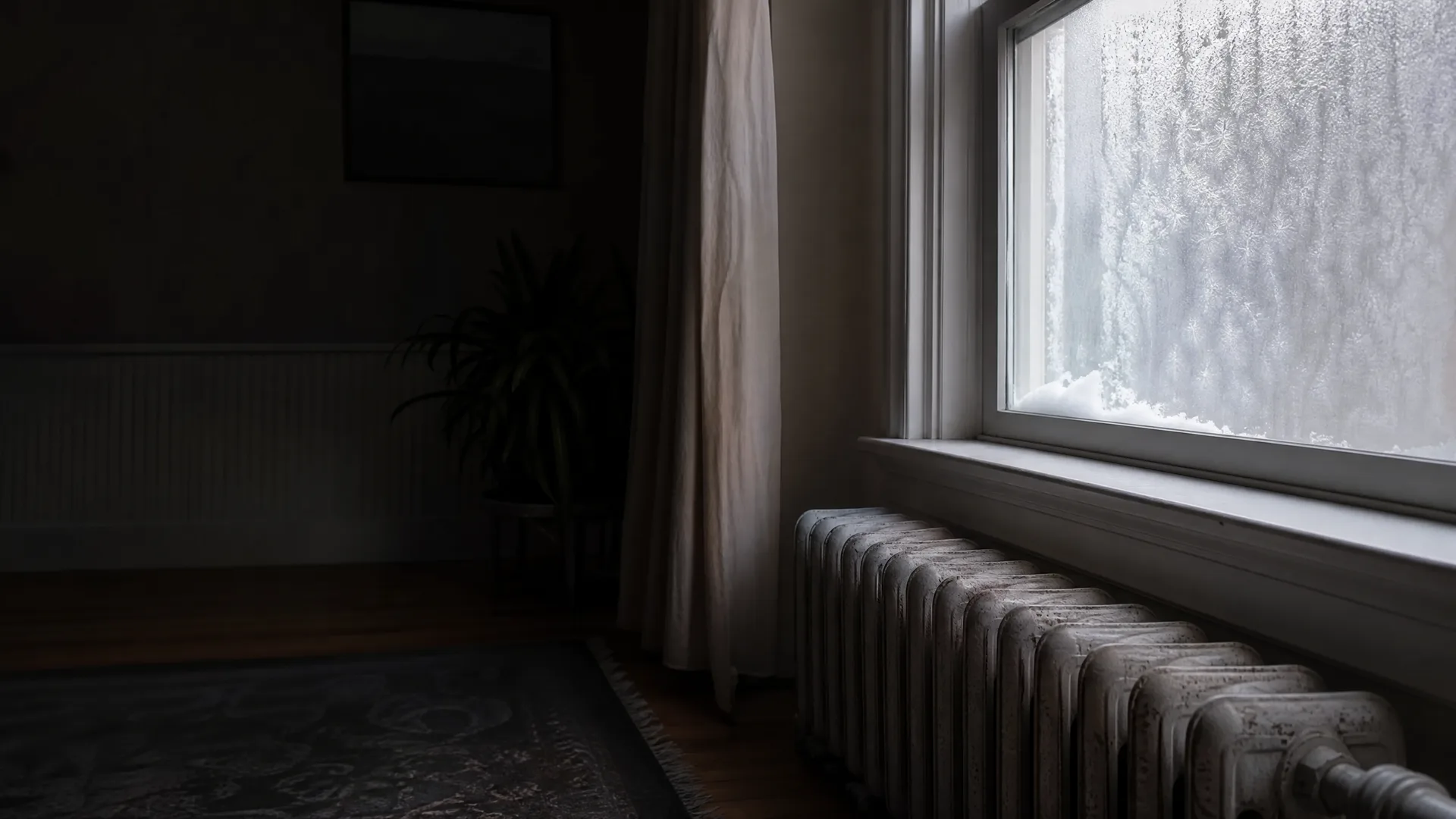
You're up before the rest of the house, and the living room is the coldest room in it. The cast-iron radiator under the window ticks once and goes quiet. You touch it and it's barely warm at the top. Outside it's still dark, one of those January mornings that gets into the single digits, and on the inside of the glass there's a thin skin of ice. You turn the thermostat up five degrees and wait, listening for the boiler to answer. It doesn't, not for a while. You already know you'll be calling someone about this before the week is out, someone who's seen this radiator's trouble before and knows what to check first.
Your request goes to one pro, not a list of companies.
Asking costs nothing, and the choice to hire stays yours.
A boiler that's twenty or more years old has usually been through more cold starts and pressure cycles than its parts were built for. The heat exchanger thins out over time, and once it cracks, that's not a repair, that's a replacement. If yours is in that range and showing any of the signs above, a cold week in January is a bad time to find out how much life is left in it.
A boiler holds a set pressure when it's sealed right, usually somewhere on the low end of its gauge. If you're adding water to it every few weeks, that water is going somewhere, through a fitting, a valve, or a hairline crack in the block. Constant pressure loss wears on the pump and the burner both, and it's the kind of problem that gets worse exactly when the system is working hardest to keep up.


Keep running it as is, and you're betting the boiler holds until spring. If the heat exchanger goes in February, you're choosing between a cold house and an emergency repair at the worst time to schedule one.
Have it looked at now, and a local contractor who works on boilers all winter can tell you what's actually wrong before it decides for you. One visit, one answer, while you still have the choice.
Overnight lows across Maryland average 27°F in December, January and February. That's below freezing most nights for three straight months, and a boiler that's losing efficiency has to work through all of them. A unit on its way out won't get a break to recover.
NOAA nClimDiv 1991-2020 county normals weighted by homes
If you've read this far, you've probably already matched one or two of these signs to your own boiler. Uneven heat in one room, a knock when the burner starts, water you've been wiping up around the base without thinking much about it. None of those are things to sit on through a Maryland winter, especially once overnight lows settle in below freezing for weeks at a stretch. A boiler losing ground doesn't get easier on it the longer you wait, and a crack in the heat exchanger or a pump that won't hold pressure tends to show up at the worst possible time, not the convenient one.
Age matters here too. A boiler near twenty years old is carrying more risk into this winter than one that's had eyes on it recently, and a contractor who works on this equipment all season knows the difference between a sign that means a small fix now and one that means something bigger is coming. That's the kind of read you can't get by watching the pilot light for another week.
What happens next isn't a pile of phone calls from companies guessing at your situation. It's one local, licensed contractor who services boilers like yours through the exact winters you're trying to get through, reaching out because your situation matches what they handle. You've noticed something. That's reason enough to have it looked at before the cold gets deeper into the season.
The pro who reaches out is licensed in Maryland.
