MD Boiler Service

Best boiler temperature for a Maryland winter

Send the form and the boiler tune-up stops being something to remember.

I'm done searching

Set the thermostat between 68 and 70 degrees during the day and let it drop to 62 or so at night. A boiler heats water and sends it through radiators or baseboards slowly, so it doesn't need to work against a wide swing in temperature to keep a Maryland house comfortable through January and February. Pushing it past 70 doesn't heat the house faster. It just means the boiler fires more often and runs longer each time, since most Maryland homes heat with electricity and that adds up fast on a bill. If a room still feels cold at 68, the problem usually isn't the thermostat setting. It's air trapped in a radiator, a zone valve stuck closed, or a circulator pump losing strength, and those show up as cold spots no amount of extra heat will fix.

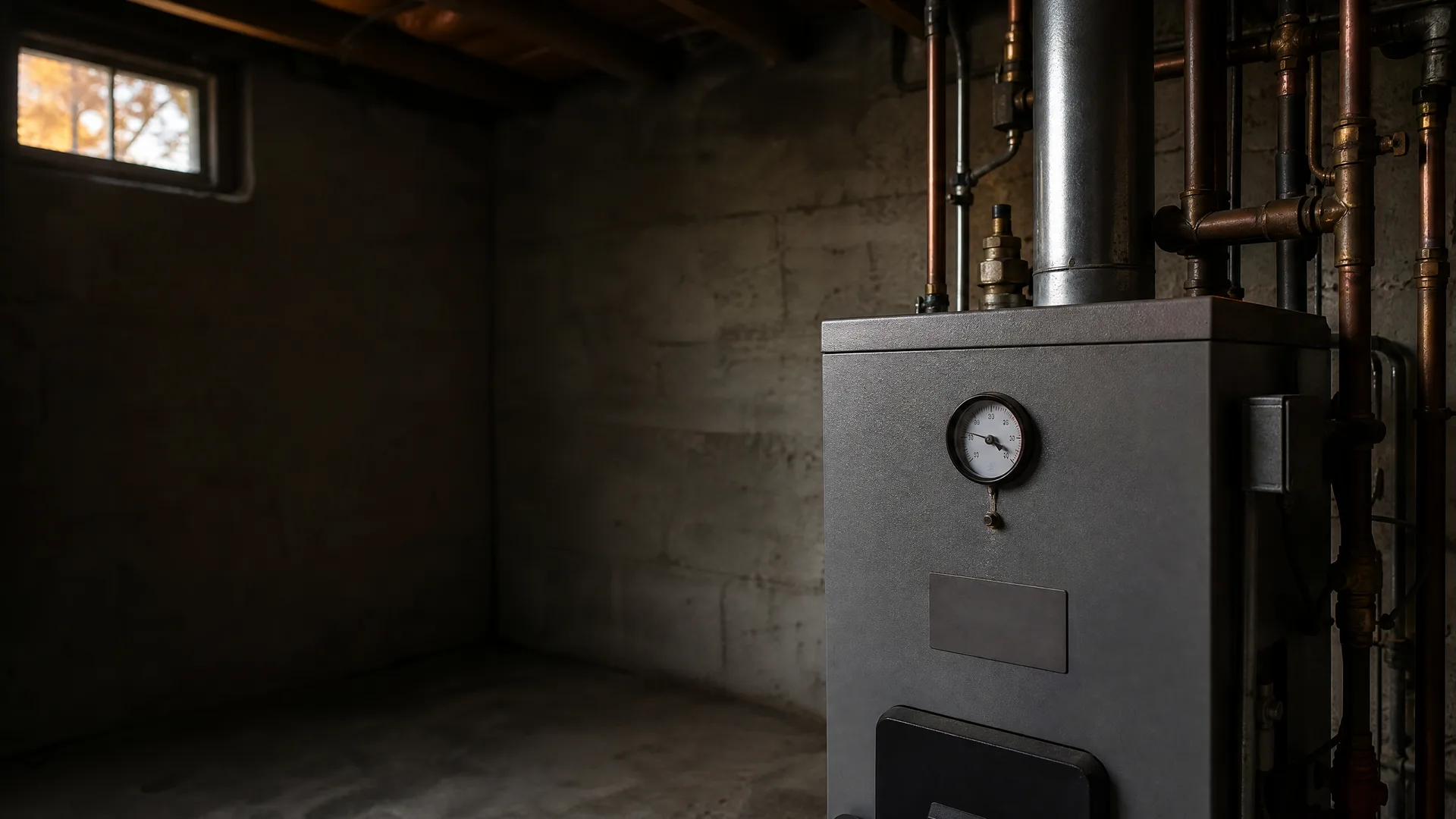
A gray boiler with a round pressure gauge and copper piping stands in a dim concrete basement lit by a small window showing yellow foliage.

You're down in the basement on a Saturday in late October, moving old paint cans off a shelf, and you catch the boiler out of the corner of your eye. The pressure gauge sits right at the bottom of its dial, needle low and still. You lean in and tap the glass, the way your father used to. It doesn't move. Upstairs the house still feels fine, the radiators are warm, but you know this is the first cold snap of the year and the thing hasn't had to work yet. You stand there a second longer than you meant to, then head upstairs to find the number for someone who can come look at it before the real cold gets here.


Why is one room never quite warm enough?

If a radiator at the far end of the house stays lukewarm while the one near the boiler gets too hot to touch, that's not a thermostat problem. It's usually air trapped in the line or a valve that needs bleeding, and it gets worse the longer it sits, since the boiler keeps pushing water past a pocket of air instead of through it. You might also hear a faint knocking or gurgling in the pipes as steam or water struggles past a blockage. Left alone, the boiler runs longer to heat the same space, and the parts doing that extra work wear down faster. With electric heat costing what it does in Maryland, a system fighting itself room to room shows up fast on the bill.

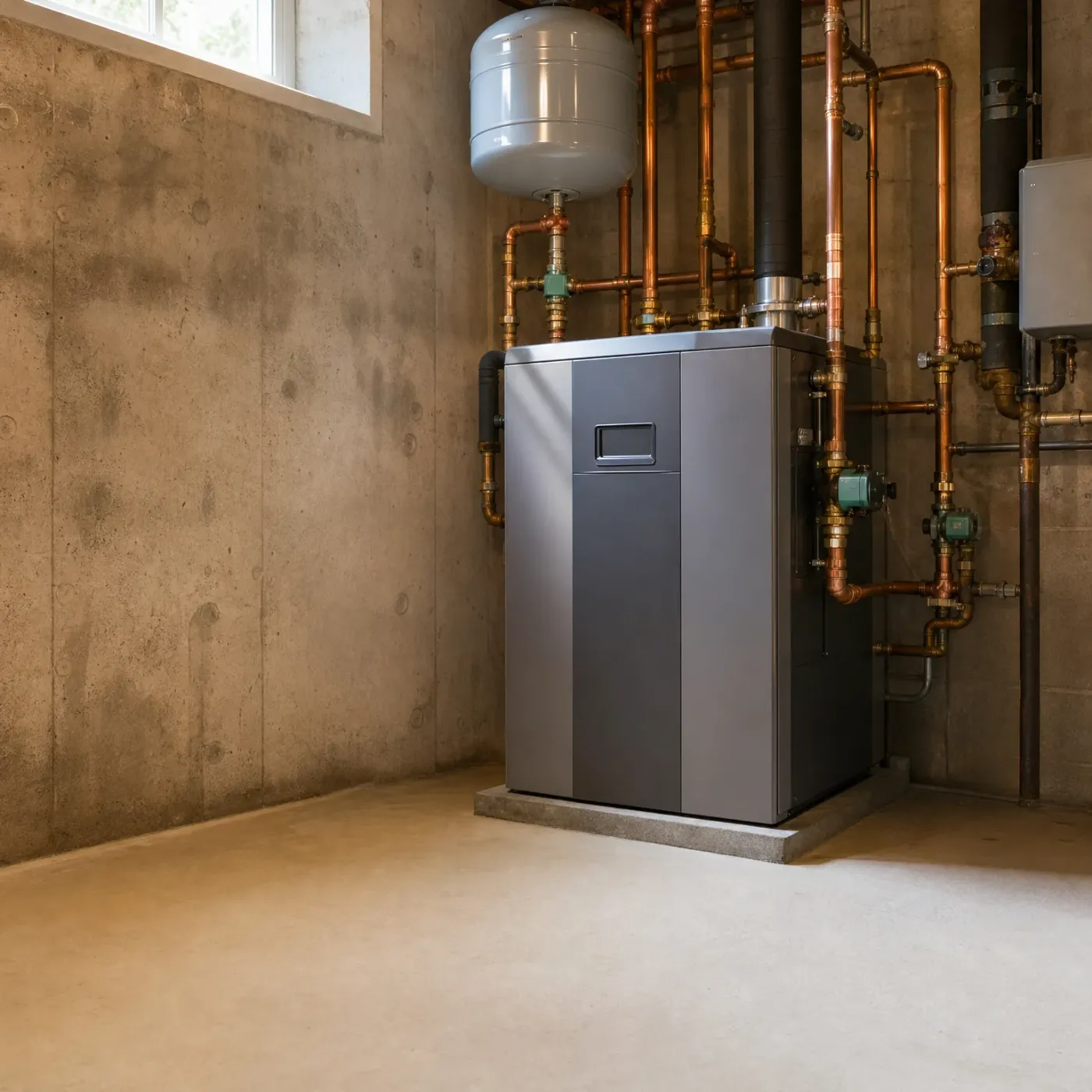
A gray floor-standing boiler on a concrete pad in a bare room, connected to copper pipes and an expansion tank against a plain light wall.

Why the water temperature matters more

The thermostat sets the room goal, but the boiler's own water temperature decides how hard it works to get there. Most boilers run supply water between 140 and 180 degrees for baseboard and cast iron radiators. Turn that setting too high and the boiler short cycles, firing on and off instead of running a steady, longer burn. A contractor can check this setting during a maintenance visit and adjust it to match your radiators.

A gray boiler on a concrete pad in a plain room, connected to copper and black pipes and a stainless steel flue.

What a pressure test tells you

A boiler built for a Maryland winter should hold between 12 and 15 psi cold. Below that, air works its way into the lines and radiators stop heating evenly. Above it, the relief valve can weep water, which looks like a leak but points to pressure instead. Checking this takes a gauge reading, nothing more, and it's one of the first things a technician looks at before touching the thermostat.

Winter nights average 27°F statewide

27°F is the overnight average for a Maryland winter, not the coldest it gets. On those nights your boiler runs longer stretches to hold 62 while you sleep, which is exactly when a weak circulator pump or a sluggish zone valve tends to show itself.

NOAA nClimDiv 1991-2020 county normals weighted by homes

A gray boiler unit on a concrete pad in a basement corner, connected to copper piping, circulator pumps, and a ceiling-mounted expansion tank against bare concrete walls.

Running the way it should

Pipes clean, fittings tight, the expansion tank holding its charge. A boiler kept up like this cycles on, brings the water to temperature, and shuts off without strain. Nothing in that basement is working harder than it has to.

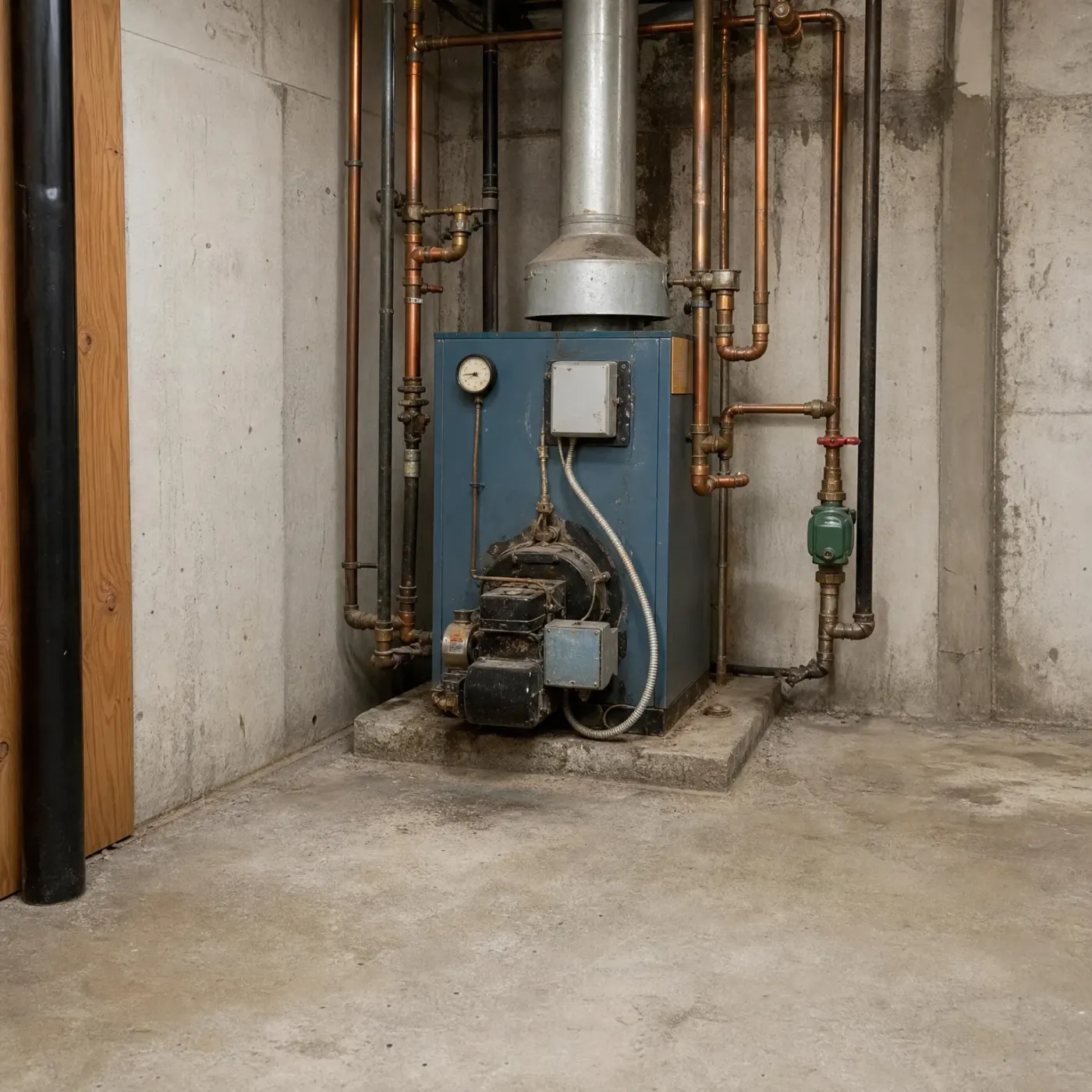
A blue oil-fired boiler with a pressure gauge, burner unit and metal flue sits on a concrete pad in a basement corner, surrounded by copper and black pipes against bare concrete walls.

Running on borrowed time

The pressure gauge, the burner, the pump all still work, but nobody's checked them in a while. A boiler left alone like this will still heat the house, right up until a stuck valve or a weak pump picks a January night to fail.

A gray-haired man with a beard in a blue button-placket shirt reclines on a couch with his eyes closed, beside a sunlit window with a green plant.
A woman in a cream knit sweater sits in an armchair with her eyes closed near a window showing yellow autumn foliage, with a mug on a round wooden side table beside her.
  1. Thermostat calls for heat and signals the boiler.

  2. Burner ignites and heats water inside the boiler.

  3. Circulator pump pushes hot water out through the pipes.

  4. Water passes through radiators or baseboards, giving off heat.

A man in a gray sweater reclines in a brown leather armchair with his eyes closed, beside a wooden side table holding a mug, a folded newspaper and a potted plant, with a bookshelf and sunlit window behind him.
A man with greying hair and a dark sweater leans back on an armchair with his eyes closed and a slight smile, in a living room with a bookshelf, plant, folded newspaper and mug on a wooden table.
A man in a gray fleece jacket sits reclined in a leather chair with his eyes closed, in a room with bookshelves, a table lamp, a window, and a desk holding a folded newspaper and a dark mug.
A bearded man in a gray fleece pullover sits with eyes closed in a brown leather armchair in a living room, with a floor lamp, bookshelf, potted plants, a side table holding newspapers and a dark mug, and a bright window behind him.

Let someone else find the pro

You've read what the right temperature is and why the water running through those pipes matters more than the number on the thermostat. Knowing that doesn't fix a circulator pump that's starting to drag or a zone valve that sticks before the cold nights set in. A boiler that's never been looked at tends to show its weak spot right when you need it least, usually in January, not October. Maryland winters ask a lot of this equipment over several months, and with most homes here heating on electricity, a boiler that's running longer than it should to hold 62 overnight is costing you more than it needs to. A local contractor who services these systems every season knows which part on a boiler like yours usually goes first, and catching it before it fails is a different job than fixing it after. Send the request and let that be someone else's work to sort out, not yours.

The Range That Works, and Who to Call

  • 68 to 70 during the day and 62 at night is the range that keeps a Maryland boiler running without strain.
  • Supply water between 140 and 180 degrees is what actually does the work, not the number on the wall thermostat.
  • A trapped radiator or a sticking zone valve shows up as a cold room before it shows up as a bigger bill.
  • Overnight lows near 27°F are when a weak circulator pump or a tired zone valve tends to fail first.
  • A boiler with clean pipes, tight fittings and a properly charged expansion tank cycles on and off without working harder than it has to.
  • A local contractor who services these systems every winter knows which part on a Maryland boiler tends to go first, and you'll hear back from one company, not several.

68 to 70 during the day, 62 at night. That's the whole answer. Everything else is about keeping the system that holds that range from struggling to get there. The supply water temperature, the trapped radiator, the zone valve that sticks, the circulator pump that's starting to drag on the coldest nights. None of that shows up on the thermostat. It shows up in a basement, on a gauge, in a pipe that's warm on one end and cold on the other.

That's the part a homeowner isn't set up to catch early, and it's the part a boiler sees every winter in Maryland whether anyone's watching or not. A contractor who works on these systems every season has already seen this winter's version of your boiler problem, probably more than once. They know which part tends to go first on a system like yours, and they know it before it leaves you with a cold room on a night in the 20s.

When you send a request through this page, it goes to one contractor, licensed and local to you, not a list of companies competing for the job. No flood of calls to sort through. Just someone who knows this equipment and this climate, looking at your boiler specifically. The range to hold is simple. Keeping a boiler able to hold it without strain, through a Maryland winter, is the part worth having someone local on.

A modern two-story house with dark siding and stone base at dusk, with lit soffit lights, a path of large rectangular pavers set in dark gravel, planting beds, a lawn, and an orange and blue sunset sky above distant trees and water.

Boiler Maintenance

One request and it's handed off

Step 1 of 3: Equipment
  • A multi-pane white window looking out on snow-covered evergreen and bare trees, with a ceramic mug, pine cones, a book, a knit blanket and a burlap cushion in the foreground.
    • A local pro who services boilers gets in touch about the tune-up.
    • Describe your boiler job, and a local pro who handles it gets in touch.
  • A cream knit throw and striped pillow on a light upholstered sofa beside a window, with a woven basket of split firewood in the foreground.
    • After you send the request, you're done searching.
    • Send the request and finding a pro stops being your problem.
  • A weathered wooden bench with a beige cushion and a fringed brown throw sits on a wood-plank porch beside a large planter with a thin-branched shrub, against a light-colored house wall with a dark-framed window.
    • Skip calling around to set up a boiler tune-up.
    • One form instead of hunting for a pro who does boiler tune-ups.
  • Exterior of a dark shingle-sided house with a white-trimmed divided-light window, a yellow-leaved tree, trimmed shrubs, and two small pumpkins on a stone pillar cap.
    • Your request stays with one local pro.
    • Your request goes to one pro, not a list of companies.